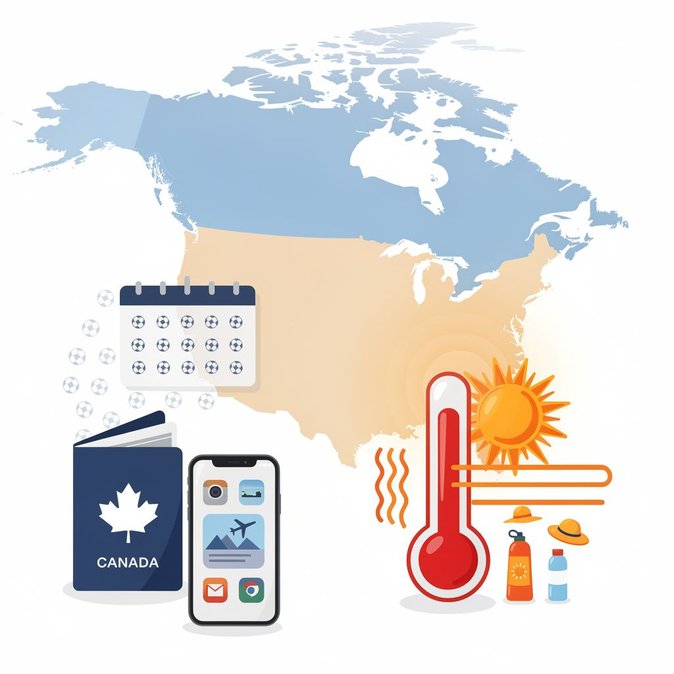
On July 27 2026, Global Affairs Canada quietly updated its advisory for the United States, dropping the special travel-health notice that had been in place for the 2026 FIFA World Cup and adding new guidance on extreme heat. The risk level for the U.S. remains "Take normal security precautions," but Canadians are now advised to prepare for temperatures above 40 °C across the South-West and Gulf Coast through September. Removal of the World Cup notice signals the end of a series of public-health measures—ranging from measles vaccination reminders to crowd-density warnings—that were introduced ahead of the tournament’s June-July matches. While most Canadian spectators have already returned home, many companies scheduled post-event site visits and client meetings in host cities such as Houston, Atlanta and Los Angeles. Mobility managers can now simplify pre-trip checklists by dropping tournament-specific requirements. The refreshed advisory devotes a full paragraph to heat-related illness, urging travellers to schedule outdoor activity for early morning or evening and to carry electrolyte solutions. Employers with field-service or construction crews in the U.S. should review Occupational Safety and Health Administration (OSHA) heat-stress standards and ensure that Canadian employees know state-level break-requirements—which vary widely and can expose firms to penalties. The document also reiterates longstanding advice on firearm prevalence, border-area crime and electronic-device searches. Of particular note for corporate travellers is a reminder that U.S. ports of entry increasingly use facial-recognition technology; employees concerned about data privacy should limit sensitive material on devices. The advisory links to DHS resources on active-shooter preparedness—content many mobility programmes now embed in mandatory pre-departure training. Looking ahead, duty-of-care providers recommend that Canadian firms treat heat-season advisories as a standing risk, similar to hurricane season. Integrating NOAA heat-index feeds into travel-approval platforms can trigger automatic reminders to pack cooling gear or adjust itineraries. The removal of the FIFA notice frees calendar space for a likely autumn update covering the U.S. presidential election, which traditionally leads to protest-related security advisories.