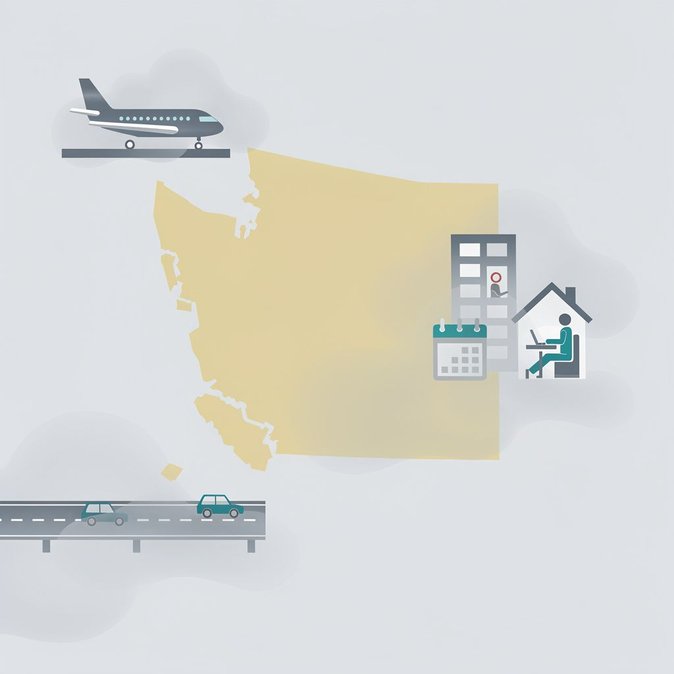
Environment and Climate Change Canada issued yellow-level air-quality warnings at 11:07 PDT on 28 July 2026 for large portions of British Columbia’s interior, including the Okanagan Valley, Kootenays and Cariboo. Dense wildfire smoke is reducing visibility and pushing fine-particulate concentrations above national health thresholds, with conditions expected to persist for 24–48 hours. While the warnings focus on public-health precautions, they carry clear mobility implications. Nav Canada has already advised pilots of deteriorating VFR (Visual Flight Rules) conditions around Kelowna International Airport (YLW) and Castlegar’s West Kootenay Regional Airport (YCG). WestJet Encore cancelled two mid-morning turboprop departures, and Air Canada Jazz reports potential delays on Vancouver–Kamloops routes. Ground transportation is also affected: BC Transit has activated replacement coaches with filtered air systems on intercity routes, and highway authorities caution that smoke may obscure wildlife and construction zones on Highways 1 and 97. Corporate relocation firms moving assignees into Kelowna’s tech corridor are advising clients to arrange temporary remote work until air quality improves. From an immigration perspective, IRCC confirms that biometrics appointments booked at Kelowna’s Service Canada Centre will be rescheduled without penalty if applicants cannot travel safely. Employers sponsoring foreign workers under the Agri-Food Pilot are urged to follow WorkSafeBC guidance on outdoor-air exposure limits. The next bulletin is due on 29 July; travellers should monitor airport departure boards and consult their carriers’ travel-waiver policies, many of which allow free re-booking when Environment Canada warnings are in effect.