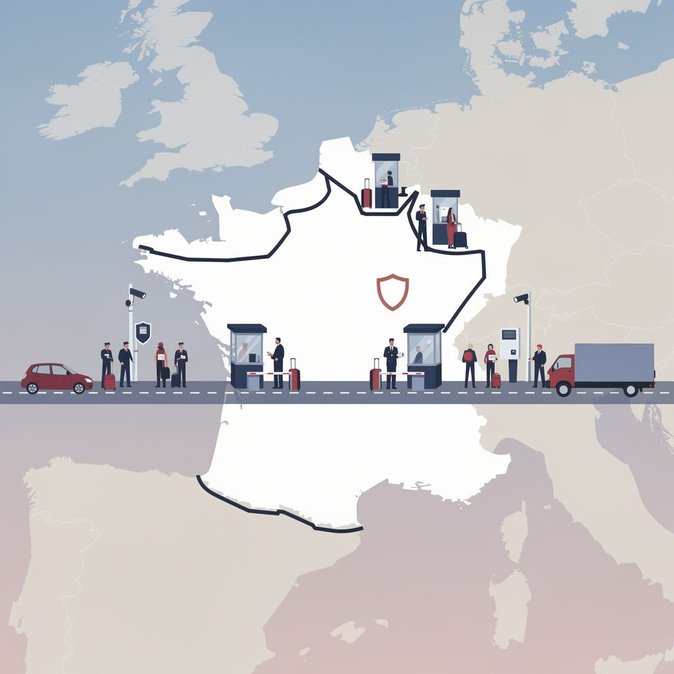
An update to the European Commission’s Schengen monitoring portal shows that France has formally notified Brussels of its intention to maintain temporary controls at all internal borders—land, sea and air—through 31 October 2026. Paris first re-established checks on 1 May in response to "persistent jihadist threats" and an uptick in people-smuggling networks, but the new filing emphasises additional security demands linked to the G7 leaders’ summit scheduled in Évian-les-Bains in September. Under Article 25 of the Schengen Borders Code, member states may reintroduce controls for renewable six-month periods if they face a serious threat to public order. France’s notification cites a convergence of risk factors: the Channel migration crisis, organised-crime violence in Pas-de-Calais, and the need to protect dignitaries during the G7. The scope covers borders with Belgium, Luxembourg, Germany, Switzerland, Italy and Spain, as well as air and ferry routes to other Schengen states. For business travellers, the practical impact is limited to longer queues at some crossing points and the obligation to carry a valid passport or national ID even when travelling from another EU country. Airline and coach operators are required to continue advance passenger-data transfers to French authorities, and companies running cross-border commuter shuttles should brief staff to allow extra time for spot checks. Immigration lawyers note that holders of French residence permits and long-stay visas remain exempt from Schengen-stay calculations but must still produce evidence of status on request. Logistics providers hauling just-in-time goods through the Franco-Italian and Franco-Spanish alpine tunnels are reporting sporadic delays of 15–30 minutes at peak hours; contingency buffers in delivery schedules are advised until at least November. The Interior Ministry has signalled that a further extension into 2027 is possible if the terrorism threat level stays at “urgence attentat”, underscoring that temporary border measures—once rare—have become a semi-permanent feature of France’s security landscape.