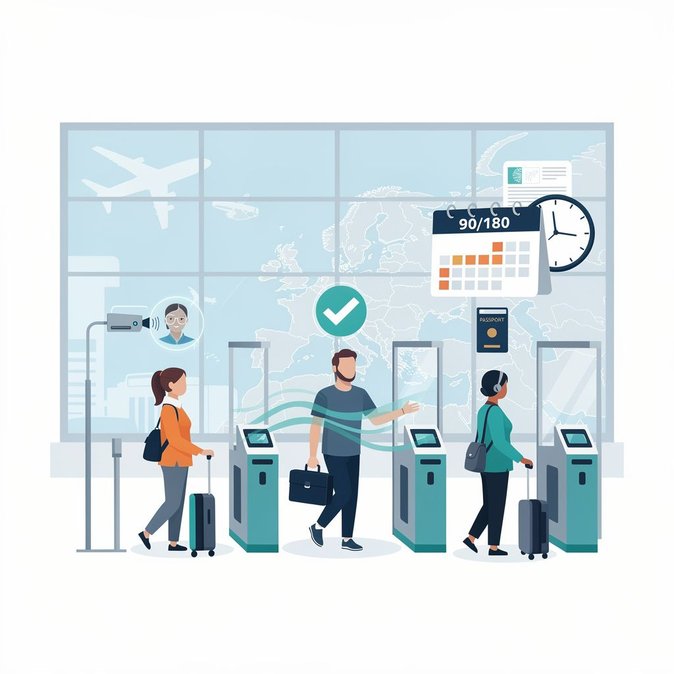
Just over 100 days after its launch, the EU’s biometric Entry/Exit System (EES) has moved from pilot phase to full operation at all external Schengen border-crossing points, including France’s airports, seaports and land borders. According to the European Commission’s Directorate-General for Migration and Home Affairs, the system has already logged more than 145 million individual entries and exits. The database replaces the old passport-stamping routine with a single biometric scan (four fingerprints plus a facial image) and automatically calculates remaining Schengen-area days for every short-stay visitor. While the transition has been smooth at Paris-Charles-de-Gaulle and other major French hubs, many travelers remain unsure who must submit biometrics. The Commission clarifies that EU/EEA nationals, holders of French or other Schengen long-stay visas, and anyone possessing a valid French or EU residence card are completely exempt from EES registration. A practical example is given: a Moroccan spouse of a French citizen, travelling on a French residence card, will continue to use the manual lane without fingerprints. Conversely, tourists and business travelers on 90-day Schengen visas must enrol at their first entry point, regardless of carrier or mode of transport. Border officials in France say the biggest benefits so far are faster repeat crossings for frequent business visitors and automated “over-stay” alerts that reduce paperwork for police aux frontières. Airlines based at CDG report transit-time savings of up to six minutes per non-EU passenger when smart-gates are used. Over the medium term, the Interior Ministry plans to link EES data with France-Visas so that overstayers can be denied future appointments automatically. Corporate mobility managers should update pre-trip briefings immediately: staff entering France on short-stay missions should arrive with sufficient buffer time (first enrollment takes two to three minutes longer than a manual stamp) and be prepared to remove masks or headgear for facial capture. Companies employing non-EU secondees on “Passeport Talent” or other long-stay permits can reassure employees that they remain outside the system, although they should still carry their residence cards. Looking ahead, French authorities are testing an upgraded “EES-FR” dashboard that will allow large employers to verify, in real time, whether external consultants have days left in the 90/180-day rule—an innovation expected to go live before the Paris 2027 Expo.