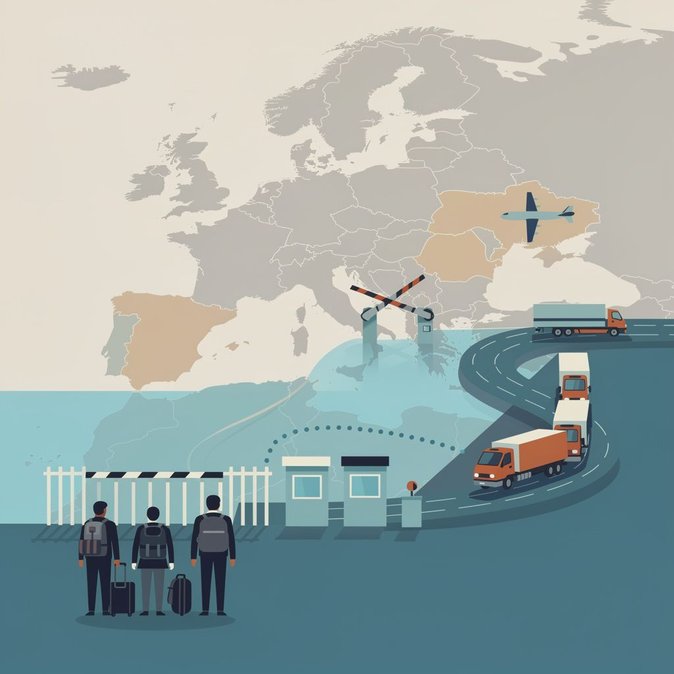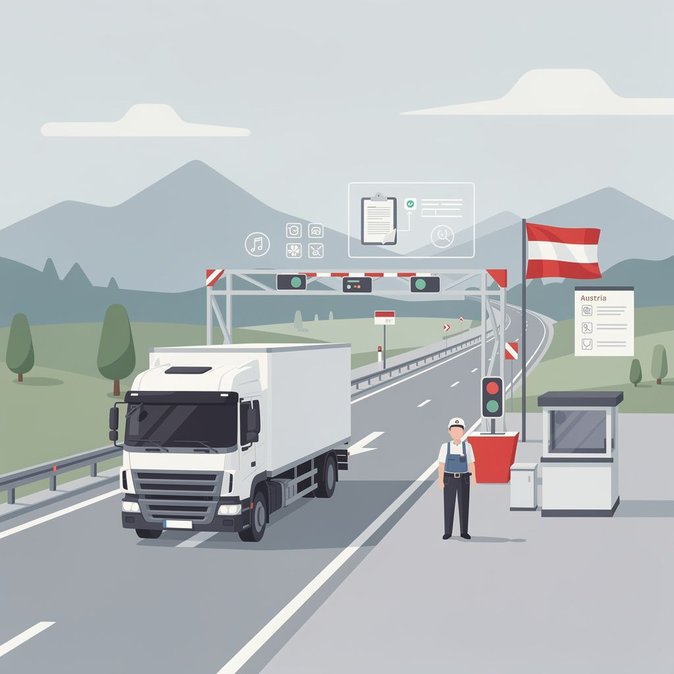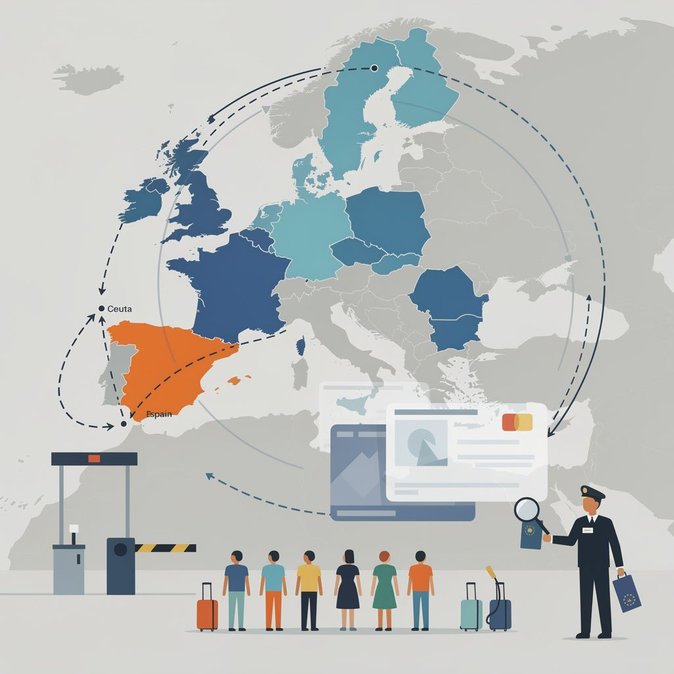
The Austrian Federal Chancellery confirmed on Saturday morning (1 August 2026) that Chancellor Karl Nehammer signed a joint letter with 19 other EU heads of government calling on the Irish EU Council Presidency to convene an extraordinary videoconference of interior ministers. The initiative comes after an estimated 50,000–60,000 migrants crossed from Morocco into the Spanish exclave of Ceuta on 30–31 July, triggering a humanitarian emergency and a fierce political debate about the integrity of the EU’s external borders. Although the Spanish territory of Ceuta lies outside the Schengen Area, the sudden influx has already prompted Italy to re-introduce internal border controls on arrivals from Spain, and Denmark and Finland have floated similar moves. In their letter, the signatory states—including Austria, Germany, Greece, Hungary and the Netherlands—warn that “uncontrolled mass crossings” and their portrayal on social media risk creating the perception that illegal entry can quickly translate into legal residence throughout the Union. They urge the Presidency to coordinate a common response that “reaffirms that the security of our external borders is a shared responsibility”. Vienna is watching the situation closely because any prolonged suspension of Schengen rules elsewhere could spill over into central Europe. Austria has relied heavily on the passport-free regime to keep road haulage, rail cargo and cross-border commuter flows with Germany, Italy and the Czech Republic frictionless. Companies in the automotive supply chain around Graz and Upper Austria warned on Saturday that even spot checks on the A9 motorway corridor could add hours to just-in-time deliveries. Tourism operators fear cancellations if airlines are forced to add passport screening and buffer time on intra-EU flights during the busy Alpine hiking season. Politically, the episode revives a domestic debate that had cooled since Austria lifted its own pandemic-era border checks last year. The opposition Freedom Party (FPÖ) seized on the Ceuta events to demand that Austria “seal the Brenner Pass” pre-emptively, while Green coalition partners cautioned against “symbolic panic measures”. Interior Minister Gerhard Karner told ORF radio that Austria currently sees “no immediate need” to restore controls but has “all operational plans ready” should migratory pressure shift towards the Balkan route. For global-mobility managers the immediate takeaway is heightened uncertainty around business travel itineraries touching Spain or Italy. Employers are advised to check that assignees carry physical passports even on flights that are normally treated as domestic Schengen services, build in extra transit time for potential controls, and monitor EU Council communications early next week. If a coordinated package emerges—ranging from Frontex reinforcements at Ceuta to a limited, time-bound re-imposition of internal checks—it could shape mobility across the continent for the remainder of the summer peak.
Source: Associated Press