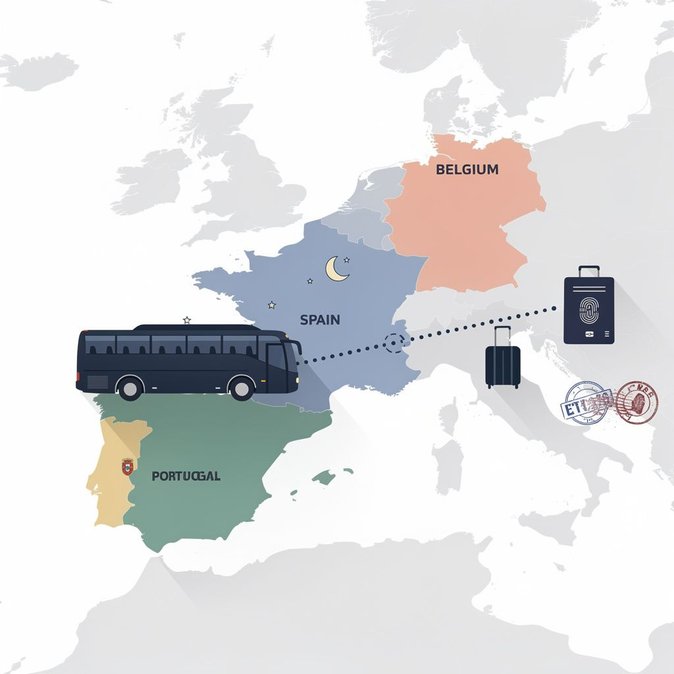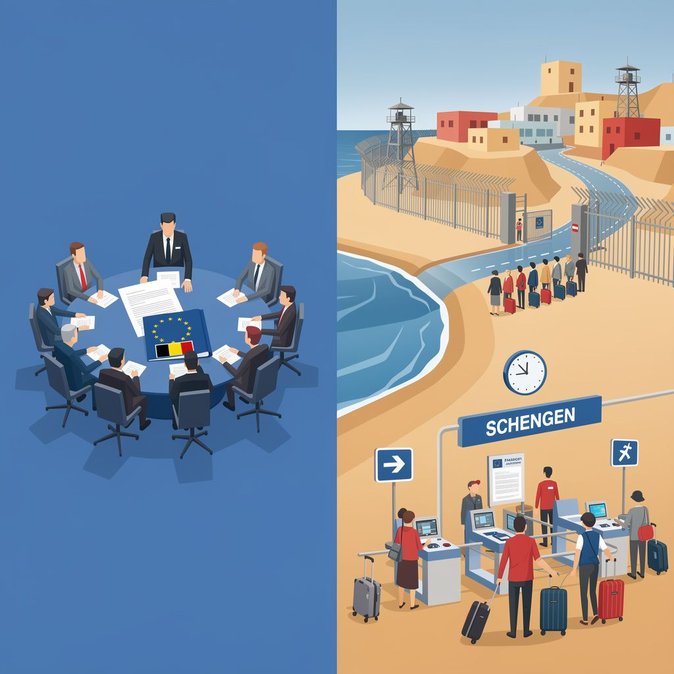
Belgian prime minister Bart De Wever has joined 21 other European Union leaders in an urgent open letter to the European Commission and the Council asking for an extraordinary meeting of interior ministers “without delay” to deal with what they call a “weaponisation of migration” at the EU’s external borders. The move follows the arrival of an estimated 50 000–60 000 migrants in less than two days in Spain’s North-African enclave of Ceuta—an unprecedented influx that has strained local reception capacity and triggered a heated political backlash across the continent. In the letter, released on Saturday 1 August 2026 by Italy’s Chancellery and co-signed by De Wever, the signatories warn that “uncontrolled mass crossings and other hybrid threats” risk undermining public confidence in the EU’s migration system and could encourage copy-cat episodes if left unanswered. They urge the Irish Council Presidency to convene a virtual Justice and Home Affairs Council and press the Commission to activate rapid-reaction tools foreseen under the new Pact on Migration and Asylum, which entered into force in June. Although Spain’s interior ministry has already deployed additional police to Ceuta and begun constructing a floating barrier designed to discourage sea crossings, critics say Spain’s own decision last month to regularise nearly half a million undocumented workers created a “pull factor.” Italian prime minister Giorgia Meloni has gone a step further, announcing the temporary suspension of visa-free Schengen travel from Spain—despite the absence of a land border—while Denmark, Austria and Greece are reportedly examining similar checks on air and sea arrivals. Belgium has not announced unilateral controls, but De Wever’s signature signals Brussels’ alignment with harder-line governments pressing for tougher external-border enforcement. In practical terms, business travellers and multinational companies based in Belgium could feel the impact in two ways. First, any EU-level decision to reinforce the southern maritime frontier is likely to divert Frontex assets from other external borders, which could translate into longer processing times for Schengen visa applicants in North Africa—an important recruitment pool for Belgian construction and logistics firms facing labour shortages. Second, if additional member states copy Italy’s move and re-introduce selective Schengen checks on flights from Spain, transit times through Brussels Airport may lengthen as carriers and border police adapt to ad-hoc document inspections under the EU Entry/Exit System. Companies should advise mobile staff to carry proof of residence or work authorisation and to build in extra connection buffers, especially for intra-EU itineraries involving Spain, Italy or Denmark. Politically, the episode shows how quickly migration flashpoints outside Belgium’s territory can shape the domestic agenda. De Wever’s coalition came to power promising stricter asylum management; his swift endorsement of the letter allows him to project toughness while leaving operational decisions—such as deploying Belgian liaison officers to Ceuta or funding Frontex surges—subject to eventual Council consensus. Stakeholders in Belgium’s export-oriented economy should therefore monitor forthcoming JHA meetings: accelerated agreement on the EU’s “crisis mechanism” could impose short-deadlined relocation or return-sponsorship quotas on member states, with direct consequences for corporate sponsorship of work permits and for social-security coordination of cross-border staff.
Source: Associated Press & Cadena SER