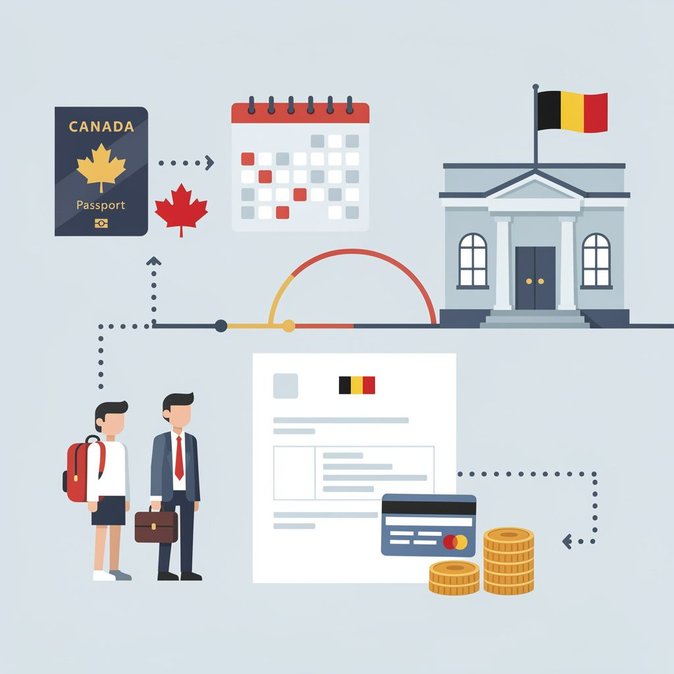
Belgium’s Immigration Office (IBZ) has quietly released the first major rewrite of its cross-border-worker rules since 1981. Published on 27 July 2026, the ministerial circular will enter into force “the day after it appears in the Belgian Official Gazette” – expected in the first half of August. The reform is designed to bring Belgian practice into line with post-Brexit realities and the growth of hybrid working that allows thousands of people to live in one country and work in another. Under the current system, residents of neighbouring EU states – Germany, France, Luxembourg and the Netherlands – can commute with an ‘Annex 15’ certificate that proves they are employed in Belgium but reside elsewhere. That paper will soon disappear. Frontier workers from the four neighbouring countries will receive a 12-month grace period to apply either for Belgium’s new electronic frontier-worker card or for a single permit if their employment pattern no longer meets the strict definition of daily or weekly commuting. Companies that continue to rely on Annex 15 risk fines of up to €8,000 per worker after the grace period. The change is even more significant for United Kingdom residents. Ever since Brexit, UK-based commuters have been in a legal grey zone. The circular now states unambiguously that UK residents “will no longer be able to enter Belgium with an Annex 15”. They must apply for a long-stay D visa through the Belgian embassy in London, obtain a single permit, and register with the local commune if their physical presence in Belgium exceeds 90 days in any 180-day period. HR teams have barely one month to identify affected staff, begin the visa process and adjust payroll reporting, because visa appointments in London are already booking six weeks out. Employers should also note the knock-on effects on Belgian social-security coverage. The removal of Annex 15 means frontier workers may become subject to Belgian social-security contributions from day one unless an A1 certificate proves continued coverage in the home country. Tax equalisation clauses in assignment contracts should be reviewed, and posted-worker notifications (LIMOSA) may be required for ad-hoc UK business travellers who cross the 20-day threshold. Practical tip: Create an internal register of all employees who live abroad and travel to Belgium for work. Check whether they qualify for the new frontier-worker card (strict daily/weekly commute, EU residence) or need to transition to a single permit. For UK talent, start the D-visa process immediately and budget extra time for biometric capture at the Belgian commune. Failure to comply could lead to refused entry at the border and corporate penalties reaching six figures for large employers.
Source: Immigration Office (IBZ)