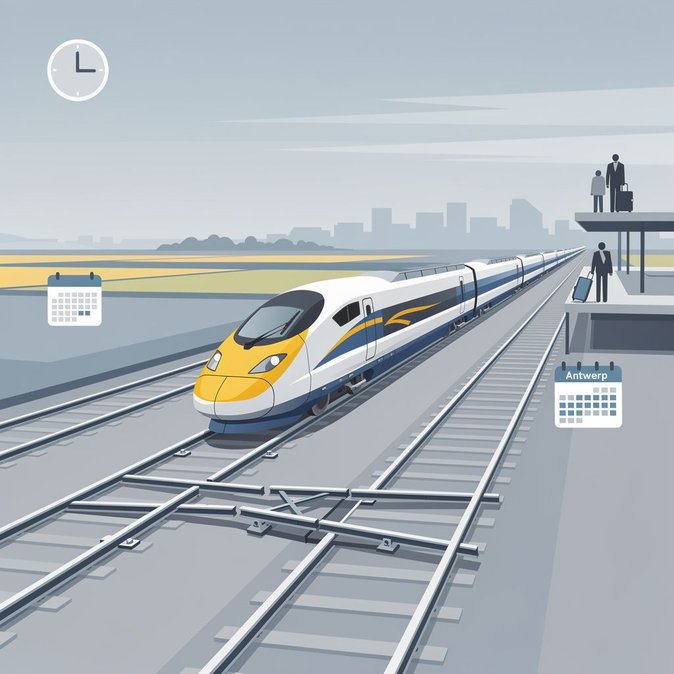
Eurostar passengers faced unexpected detours and delays on 29 July after a track-switch defect north of Antwerp forced several Brussels–Amsterdam services to terminate early. Travellers reported being set down at Antwerp Central, where they were instructed to switch to domestic Belgian Rail (SNCB) or Thalys services before re-joining Eurostar in Rotterdam. The disruption first came to light when an Amsterdam-bound Eurostar unit was spotted idling with its doors open at Antwerp—an unusual occurrence because the station is not equipped for full juxtaposed UK border controls. Eurostar confirmed that “a signalling issue on the Belgian network” required trains ES9162, ES9164 and ES9166 to be rerouted. While Belgian-Dutch services stayed within the Schengen area, the knock-on effect was felt by London-bound travellers: some missed their onward connections because they had to re-clear UK Border Force checks at Brussels-Midi. A separate advisory circulating on Eurostar forums reminded passengers that, under post-Brexit rules, they must disembark in Brussels for security and passport formalities even when holding though-tickets from Amsterdam to London. The incident underscores the fragility of the cross-border rail ecosystem just days before the busy August getaway. Business travellers favour the three-hour Brussels-London rail link over short-haul flights because it allows laptop work and avoids aviation security queues. However, when infrastructure failures occur, the absence of surplus rolling stock and the added complexity of juxtaposed controls mean recovery times are longer than on purely domestic routes. In a statement, Belgian infrastructure manager Infrabel said engineers replaced a faulty points motor overnight and re-opened the track at 05:00 on 30 July. Eurostar resumed its normal schedule but warned of “residual delays” while trains and crews are repositioned. The operator is offering free re-booking within 60 days or a 50 percent e-voucher for disrupted journeys. HR and mobility teams with employees shuttling between Brussels, Amsterdam and London should advise staff to monitor the Eurostar app, allow at least one extra service in case of mis-connections, and keep original ticket receipts for potential EU rail compensation claims. Companies with time-sensitive meetings may wish to revert temporarily to flights or conduct virtual sessions until service reliability stabilises.