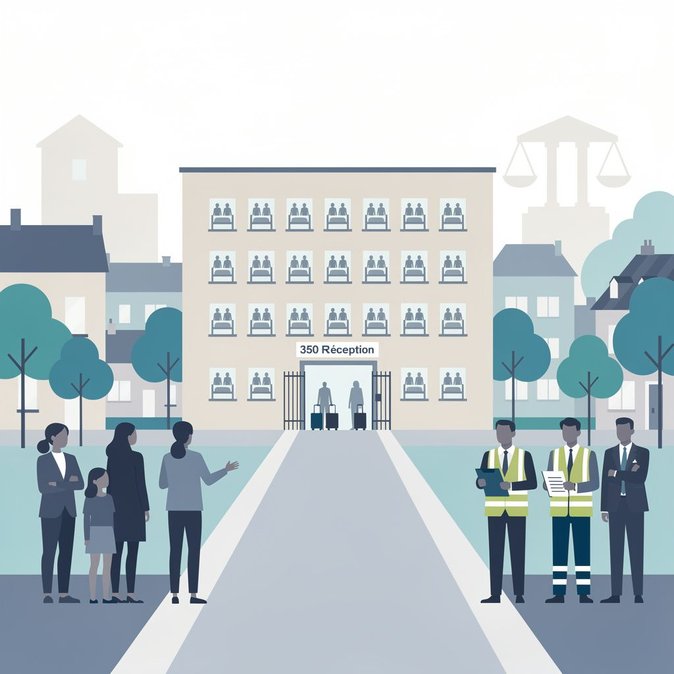
Late on the evening of 29 July 2026, residents of the quiet, residential districts of Auderghem and neighbouring Watermael-Boitsfort discovered that an empty office block on Avenue de Beaulieu had begun receiving single male asylum-seekers. The privately-owned building was leased to the NGO BelRefugees under an urban-planning permit that reclassified the 38,000 m² site from offices to a ‘collective accommodation for refugees’. Regional planning documents show that the permit was validated on 18 June after a one-month public-inquiry period, but no follow-up communication was issued to local inhabitants once the decision became final. According to BelRefugees staff quoted in internal briefing notes shared with volunteers, the centre can host up to 350 men for stays of up to three months while they wait for the Federal Asylum Agency (Fedasil) to assign them to permanent accommodation. Belgium has faced repeated capacity shortages in its federal reception network; in the first half of 2026 more than 5,000 recognised refugees remained on waiting lists for a bed. Turning vacant commercial property into temporary shelters has therefore become an emergency tool for the Brussels-Capital Region. Local authorities say they had little room to manoeuvre. Under the 2007 Reception Act, municipalities must ‘co-operate loyally’ with Fedasil when suitable premises are identified. Auderghem’s college of aldermen issued a critical opinion during the consultation phase, arguing that a 300-plus single-male facility was ‘disproportionate’ for a low-density neighbourhood and urging a cap at 150 places. That advice was over-ruled by the regional delegate who signed off the permit. The commune now requests additional policing funds and improved lighting around the site after late-night loitering and bicycle-theft attempts were reported by residents less than 48 hours after opening. From a mobility-management perspective, the case illustrates Belgium’s continued dependence on ad-hoc solutions rather than structural expansion of the federal reception network. While converting offices offers speed, it raises questions about integration prospects for asylum-seekers who may spend only weeks in a neighbourhood with limited social-support capacity. Employers interested in hiring newcomers under the Flemish ‘single permit’ scheme have also voiced concern that short stays in Brussels facilities complicate labour-market activation, as municipal registration and language-course placement typically take longer than the shelter’s rotation cycle. For global-mobility managers the episode is a reminder that Belgium’s asylum-system bottlenecks can spill over into housing, schooling and local-services pressure in areas where expatriate employees also live. Companies relocating staff to south-eastern Brussels would be well advised to brief employees on the situation, monitor any security updates from the commune and factor potential neighbourhood tensions into relocation-support packages.