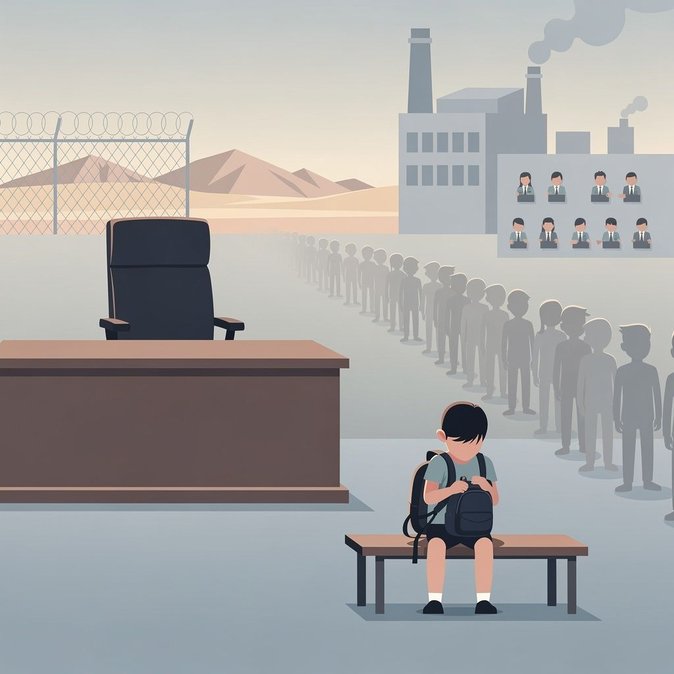
Thousands of unaccompanied migrant children currently in U.S. federal custody could face deportation without counsel after a long-standing legal-services contract expired at midnight on July 31. For more than a decade, the Department of Health and Human Services (HHS) had funded a consortium of nearly 100 nonprofit organizations to provide ‘Know Your Rights’ orientations and direct representation for children placed in government shelters. The Trump administration allowed the contract to lapse and has not announced a replacement program. Advocates say roughly 20,000 minors—many from Mexico and the Northern Triangle—rely on those services each year to navigate asylum claims, Special Immigrant Juvenile petitions and other relief pathways. Without attorneys, the children will have to argue complex immigration cases alone, a scenario that historically results in deportation orders in 9 out of 10 cases, according to Syracuse University’s TRAC data. HHS and U.S. Citizenship and Immigration Services have offered no clarity on whether new procurement will be issued. Nonprofits report they have not been paid for more than six months and have begun furloughing staff. Melissa Lopez, executive director of Estrella El Paso, warned that “the government is trying to dismantle the safety net by attrition,” noting her group represents 243 children in West Texas alone. From a corporate-mobility perspective, the development heightens compliance risk for companies that sponsor humanitarian parole or family-reunification cases for employees. Employers may need to underwrite private counsel or adjust relocation timelines for workers caring for affected relatives. Industry groups are also bracing for potential demonstrations and operational slowdowns at southern ports of entry if deportations accelerate. Policy analysts expect legal challenges under the Trafficking Victims Protection Reauthorization Act, which mandates efforts to “ensure that unaccompanied children in removal proceedings have counsel to represent them.” Until then, mobility managers should monitor any spikes in removal orders that could disrupt workforce stability, particularly in construction, agriculture and service sectors that depend on mixed-status families.
Source: Associated Press