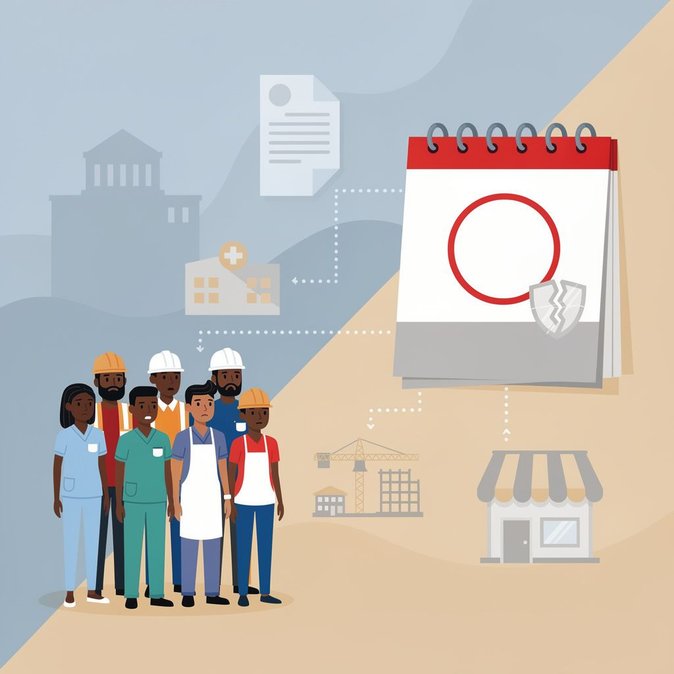
The United States’ Temporary Protected Status (TPS) designation for Haiti expired at midnight on July 28, and by dawn on July 29 Haitian families in Miami’s Little Haiti and Boston’s Mattapan neighborhoods were waking to a new reality: long-time legal work authorization had vanished overnight. In interviews with public-radio affiliate WUSF, Haitian TPS holders said they were stockpiling groceries and skipping work for fear of roadside or workplace checkpoints as Immigration and Customs Enforcement (ICE) reportedly redeploys agents to Haitian-American population centers. A DHS spokesperson would confirm only that “law-enforcement activity continues on a daily basis.” Employers are bracing for immediate staffing gaps. The Massachusetts Senior Care Association estimates that 2,000 certified nursing assistants could lose work eligibility this week, threatening already thin staffing ratios in elder-care facilities. In South Florida, construction-trade groups warned of project delays and cost overruns if even a fraction of the region’s 40,000 Haitian TPS workers are detained or forced underground. Many companies are urging employees to apply for humanitarian parole, Deferred Enforced Departure (DED) or, where possible, family-based adjustment—but immigration lawyers caution that processing times have lengthened and approvals are far from certain. The Biden administration attempted to extend Haitian TPS in 2025, but litigation brought by states arguing economic burden and by restrictionist groups challenging DHS authority led to a Supreme Court ruling last month that the original basis for the designation—Haiti’s 2010 earthquake—no longer meets statutory criteria. While the Court gave DHS discretion to grant short humanitarian parole on a case-by-case basis, advocates say the agency lacks the capacity to process hundreds of thousands of applications in time to prevent mass job loss. For global-mobility and HR professionals, the practical implications are urgent. Companies employing Haitian nationals should: (1) conduct an immediate audit of I-9 documentation for affected staff; (2) prepare and distribute “know-your-rights” materials covering ICE site-visit procedures; (3) explore alternative visa strategies such as H-2B for seasonal roles or L-1 blanket petitions for multinational transferees; and (4) coordinate with local legal-aid organizations to facilitate parole or family-sponsorship applications. Longer-term, the episode highlights the vulnerability of humanitarian work authorizations to sudden policy reversals and court actions. Mobility planners may wish to diversify critical-skill hiring pipelines and build contingencies—such as remote-work arrangements from Canada or the Caribbean—for employees whose U.S. status could become unstable with little notice.
Source: WUSF Public Media