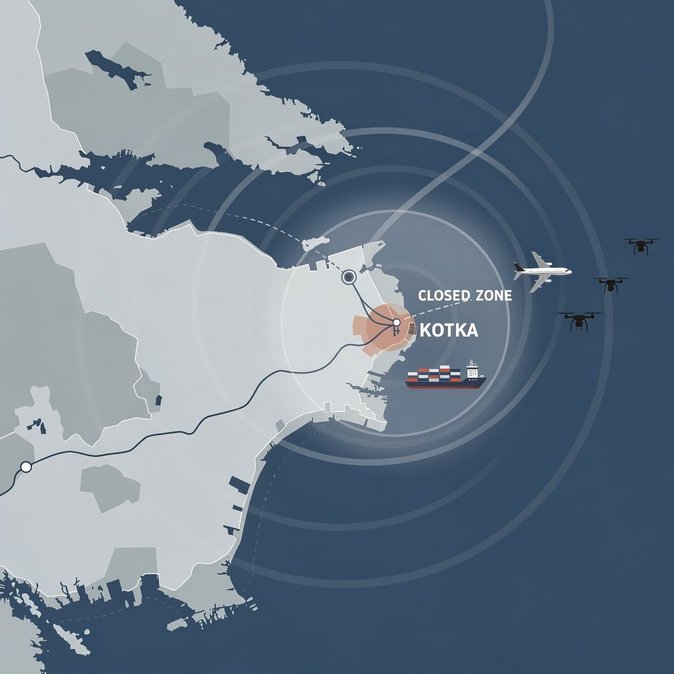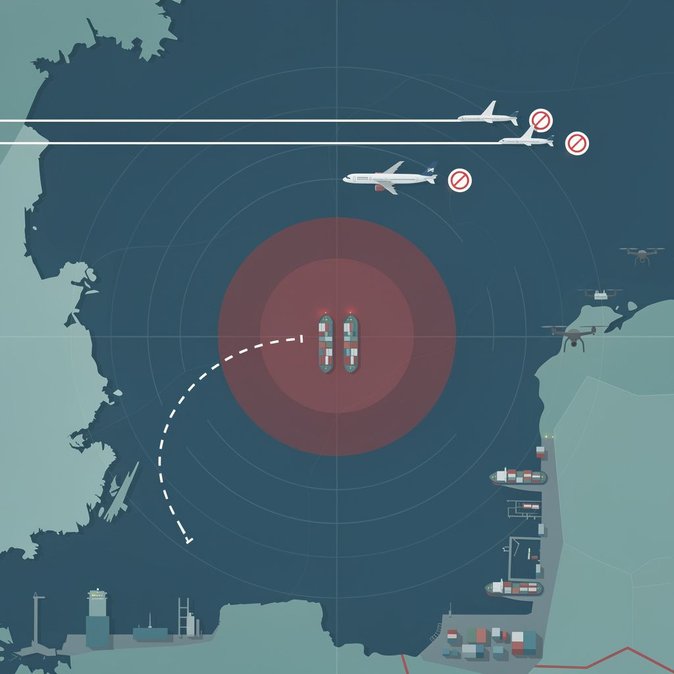
Finland woke up on Tuesday, 4 August 2026, to an unannounced security drill that directly affected morning logistics in the country’s busiest maritime corridor. At 05:26 local time, the Finnish Defence Forces (FDF) imposed a temporary no-fly zone over the eastern Gulf of Finland, followed fourteen minutes later by a halt to civilian vessel movements in the same area. The closure covered the approaches to the ports of Kotka and Hamina—gateways that handle roughly a quarter of Finland’s containerised imports and timber exports. According to an FDF statement, the measures were purely precautionary: Finnish radar operators had detected Ukrainian long-range drones crossing Russian territory toward targets near St Petersburg. Although no unmanned aircraft violated Finnish airspace, defence planners wanted to create an empty “safety bubble” in case an interception or stray debris endangered commercial traffic. The restrictions were lifted at 07:13 once the threat window passed. Similar but shorter closures have occurred five times since mid-July as Ukrainian forces step up drone raids on Russian oil-handling facilities in the Baltic region. For logistics managers the disruption, though brief, was real. Several early-morning feeder ships delayed departure; Finnlines reported that its 06:00 Kotka–Travemünde ro-ro sailing left 48 minutes late, while Fintraffic’s air-navigation service rerouted four regional flights bound for Helsinki over western Finland, adding up to 12 minutes flying time per sector. "Every closure forces us into costly contingency routing," said Jukka Toivonen, head of operations at ESL Shipping. "The fact that we now have a standing protocol helps, but the accumulated delays ripple through the day’s schedule." The episode highlights how Russia’s war and Ukraine’s asymmetric responses are spilling over into Nordic mobility infrastructure. Since Finland joined NATO in 2024, the FDF has gained expanded legal authority to close civilian airspace without cabinet approval when protecting "vital national interests". Port operators are now revising emergency-response playbooks to factor in 30- to 90-minute shutdowns that may come with only minutes’ notice. For business travellers and freight forwarders the key takeaway is resilience planning. Companies with just-in-time supply chains into or out of southeast Finland should incorporate buffer windows and route alternatives—often via the Port of Helsinki or the Swedish land bridge at Haparanda–Tornio—to mitigate future snap closures that are likely to continue as long as drone warfare persists in the vicinity of St Petersburg.
Source: Yle News