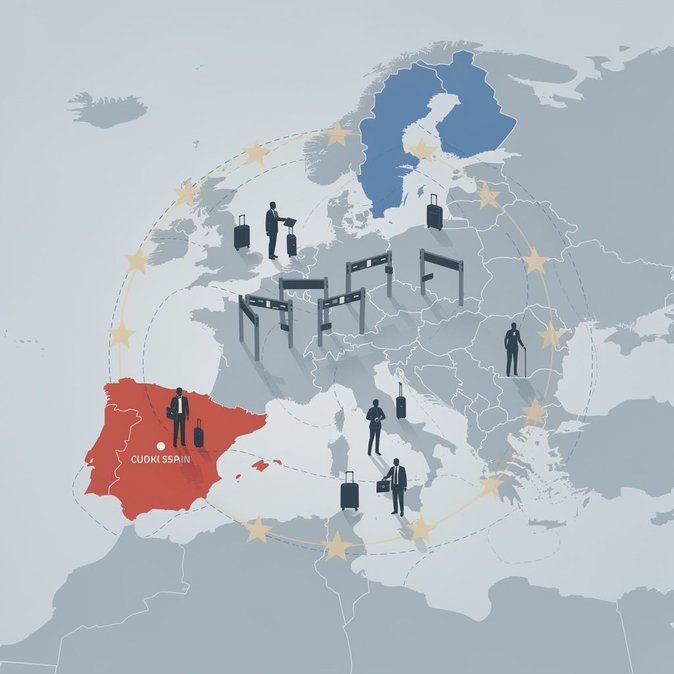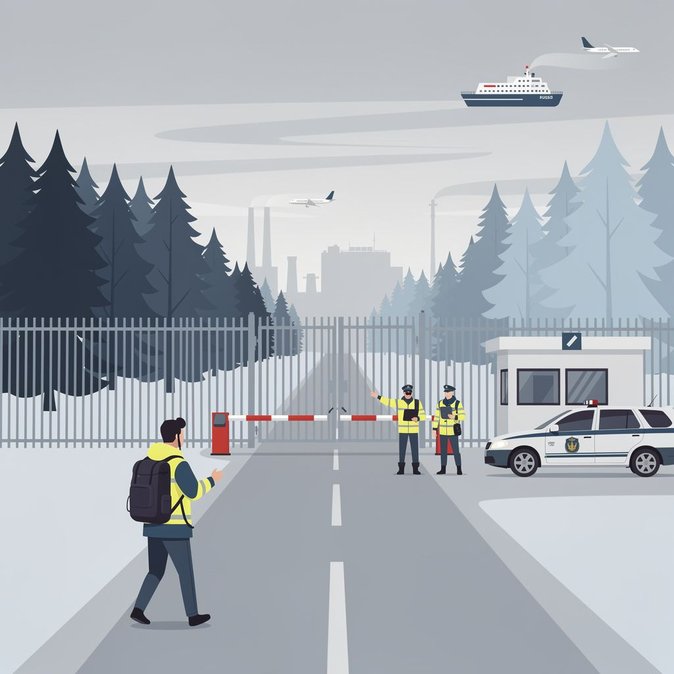
Finland’s long-closed eastern land frontier saw rare activity late on Saturday night when border guards in Ilomantsi, North Karelia, apprehended a foreign national who had slipped across the forested demarcation line from Russia’s Suojärvi district into the Mutalahti area. The individual was spotted by surveillance patrols and taken into custody without incident before formally applying for asylum. Although the single crossing was swiftly contained, it is the first publicly reported breach of the 1 340-kilometre border in several weeks and comes while all official road and rail crossing points have remained shut since December 2023 under successive government emergency decrees. Helsinki last reviewed the closure on 4 June 2026 and decided to keep it in force “until further notice”, citing continued “instrumentalised migration” pressure from Moscow. Business travellers and logistics firms therefore continue to rely on air, sea or the lengthy detour via the Baltic states for any traffic between the two countries. The incident triggers a criminal pre-trial investigation for suspected “state-border offence”, but border officials say the asylum procedure will run in parallel. Under Finland’s accelerated rules, applications lodged after an illegal entry can still be processed, yet the applicant may face detention pending identity and security checks. Companies that employ cross-border staff should note that even humanitarian entries do not relax the blanket closure for regular travel; work-permit holders must continue entering by air. For global mobility managers the case is a reminder that the eastern border remains volatile. Emergency relocation or rotation of Russia-based personnel should factor in routing through Helsinki Airport, Tallinn or Stockholm, with additional lead time for Schengen visa issuance now averaging three weeks for Russian passport-holders. Contingency plans should also anticipate ad-hoc temporary protection requests as political tensions persist. Looking ahead, the interior ministry is drafting legislation that would allow push-backs during extraordinary situations until at least 2028; parliament begins debate in September. Should that bill pass, corporate travel policies may need updating to ensure mobile workers understand the legal ramifications of approaching the land border, even inadvertently.
Source: Yle Uutiset