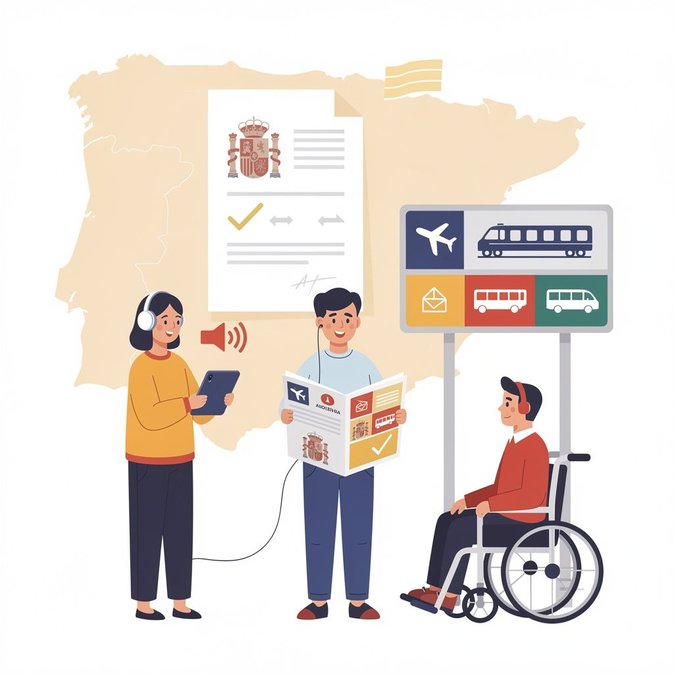
On 14 September the Spanish government published Royal Decree 707/2026, the country’s first nationwide regulation mandating cognitive accessibility across public administration, justice, private businesses—and crucially for mobility programmes—transport operators. The decree obliges train, bus and aviation companies to adapt ticketing, signage and online booking to plain-language and Easy Read standards, with phased deadlines starting 2027. Companies managing corporate travel will need to liaise with carriers as new formats (pictograms, audio prompts, simplified boarding passes) roll out. Failure to comply can trigger fines of up to €600 000 under Spain’s disability-rights law. HR policies should therefore incorporate accessibility checks when selecting preferred suppliers and arranging relocation briefings for employees with cognitive disabilities. Beyond transport, employers must offer cognitively accessible recruitment material and internal documentation, potentially affecting expatriate-onboarding packs and safety manuals. Multinationals already aligning with the EU Accessibility Act may gain a compliance head-start, but localising Spanish-language content remains necessary. Industry associations have six months to draft sector guides. Travel-management companies (TMCs) anticipate higher upfront costs but predict easier self-service bookings for neurodiverse travellers, which could reduce support calls in the long run. Because Spain often serves as a pilot jurisdiction for EU social-policy innovations, observers expect Brussels to watch implementation closely, potentially informing pan-European standards that would impact mobility across the bloc.
Source: AccessibleEU