Blue-Card process goes fully digital as 30-day approval deadline enters force
Ports across Italy face 24-hour shutdown on 28 September after USB union issues strike notice
Impatriate-tax regime: new circular clarifies minimum years of foreign residence
Latest News

Instant payment systems slash remittance costs to Italy, says Bank of Italy study
A Bank of Italy paper released on 14 September 2026 finds that domestic Fast Payment Systems are already lowering average remittance costs by 4-7 %. Narrower FX mark-ups and stronger competition benefit the five-million foreign workers in Italy and the companies that employ them. Mobility managers should revisit payroll and expense processes to leverage cheaper, faster rails.

Eurostat: only 54 000 Ukrainians under temporary protection remain in Italy
Eurostat figures dated 14 September 2026 show that only 54 000 of the EU’s 4.43 million Ukrainian protection holders are in Italy, down sharply from 2024. Companies wanting Ukrainian workers face a shrinking domestic pool, and new EU rules tighten eligibility. Mobility teams should secure appointments quickly and monitor future policy shifts under the EU Migration Pact.

Puglia launches survey on Italians’ attitudes toward migrants ahead of new regional integration plan
Puglia’s government opened an online survey on 14 September 2026 to gauge residents’ views on immigration before drafting its 2027-2029 regional migration plan. Results will shape funding for integration programmes that many employers depend on. Companies in southern Italy should encourage participation and follow the policy timeline closely.

Four-hour public-transport strike hits Bergamo on 14 September, impacting airport transfers
A 4-hour bus strike in Bergamo on 14 September 2026 disrupted transfers to Orio al Serio Airport. No flights were cancelled, but travellers faced delays and higher taxi costs. Mobility managers should note the increasing frequency of local transport strikes in Italy and plan ground-transport contingencies.
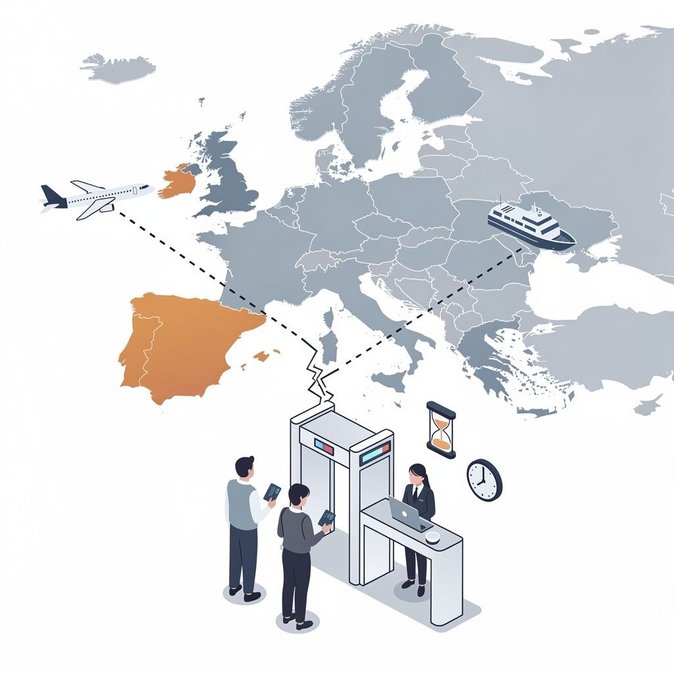
Italy Re-imposes Air and Sea Border Checks With Spain After Ceuta Migrant Surge
Italy has temporarily suspended Schengen-area free movement with Spain, re-introducing passport and security checks on all flights and ferries after the mass migrant breach in Ceuta. The measure, announced on 4 August, is valid for ten days but could be extended, and is already causing longer queues at Italian airports and ports. Businesses face potential delays and compliance obligations, underscoring how quickly intra-EU mobility can be disrupted by migration crises.

Spain Urges Italy to Lift Post-Ceuta Border Checks, Schengen Row Intensifies
On 4 August, Madrid formally demanded that Rome revoke the air- and sea-border checks it re-introduced on travellers from Spain after the Ceuta migrant surge. Spain calls the measure disproportionate; Italy says it is a short-term security step. The European Commission will now review the legality of Italy’s Schengen suspension, while airlines report mounting delays. Corporate travellers moving between Spain and Italy should expect longer processing times and possible document checks.

Italy Presses EU to Tie Trade and Aid to Migrant Returns in Wake of Ceuta Shock
At an EU ministerial video-conference on 4 August, Italy’s Interior Minister Matteo Piantedosi urged the Union to make development aid, visas and trade deals conditional on non-EU countries accepting the return of their irregular migrants. He also pitched Italy’s Albania-based migrant-processing centres as a model for future EU ‘return hubs’. The Belgian Council presidency will bring concrete proposals to the September JHA Council, signalling possible future visa restrictions for workers from low-co-operation countries.