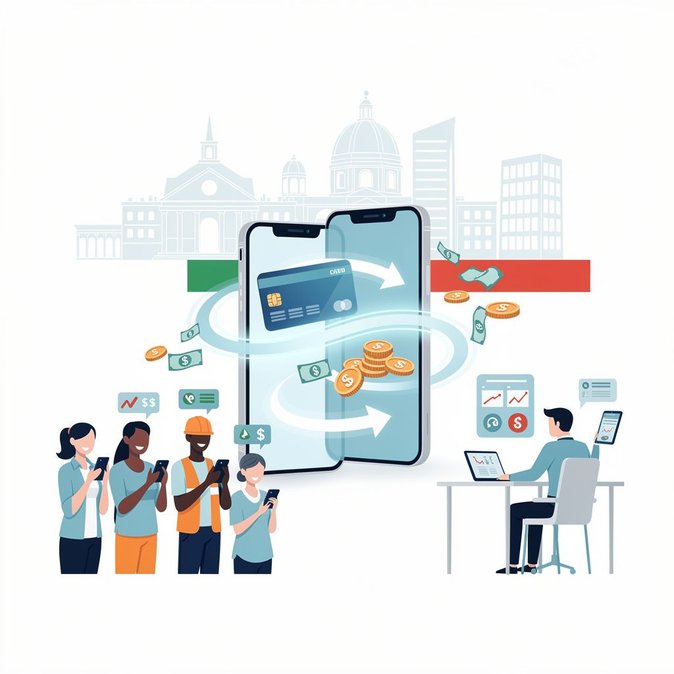
A new analytical paper released on 14 September 2026 by the Bank of Italy has good news for the more than five-million foreign workers who regularly send money home from Italy. The study—titled “Mandami i soldi appena possibile! Sistemi di pagamento istantaneo e costo delle rimesse”—shows that the roll-out of domestic Fast Payment Systems (FPS) such as SEPA Instant Credit Transfer and the Banca d’Italia’s own TARGET Instant Payment Settlement platform is already cutting the average cost of outward and inward remittances by between 4 % and 7 %. Researchers matched granular transaction data from money-transfer operators, banks and fintechs with a difference-in-differences econometric model. They found that once an FPS becomes operational in a sending or receiving country, exchange-rate mark-ups narrow and competitors are forced to reduce their fees—especially on cash pick-up corridors that have historically been the most expensive. For example, the cost of wiring €200 from Milan to Dakar fell from €14.20 to €12.90 within six months of Senegal connecting to an FPS hub. Why does it matter for global mobility managers? Lower transfer costs directly increase a worker’s effective net salary, making Italian assignments more attractive and easing wage-pressure for employers. Payroll teams that use split-salary arrangements can also settle the overseas portion faster, reducing FX exposure. The authors note that cross-border interoperability of instant-payment rails is still limited; once full interconnection is achieved, they expect a second-round cost reduction of up to 3 percentage points. Practically, HR departments should review the payment channels embedded in their relocation policies. Several Italian banks already enable same-day credit to mobile wallets in the Philippines, Morocco and Albania—three of the top destinations for remittances from Italy. Companies reimbursing expenses in real time via FPS can therefore improve assignee cash-flow while saving on traditional banking fees. Policy-makers also take note: achieving the UN Sustainable Development Goal of reducing remittance costs to below 3 % by 2030 now looks technically feasible, provided that regulators accelerate API standardisation and anti-money-laundering alignment across EU and third-country payment systems.