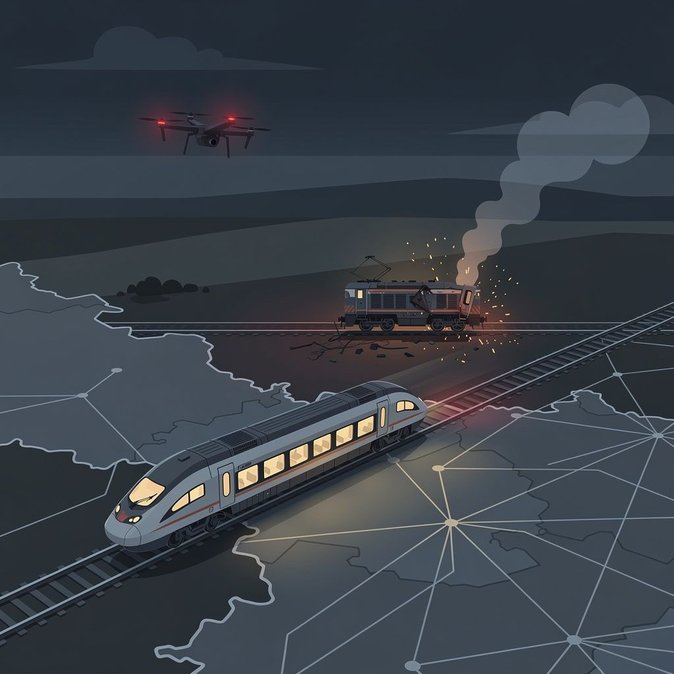
The rail artery that links Kyiv with Warsaw became the latest symbol of Russia’s widening war on 13 September when a drone slammed into a locomotive at Yahodyn station, just 1.8 kilometres from Poland. Le Monde broke the story on 14 September, noting that a special diplomatic train carrying former UK prime minister Boris Johnson, Sweden’s Carl Bildt and other dignitaries had left the same platform only minutes earlier. All 206 passengers on the regular Kyiv–Warsaw overnight service were unharmed, but service was halted for 18 hours. Polish Foreign Minister Radosław Sikorski, already in Kyiv for talks, condemned the strike as an “escalation aimed at NATO’s doorstep.” Ukrainian state rail operator Ukrzaliznytsia has since altered timetables and ordered unscheduled stops to be carried out under blackout conditions. From a mobility standpoint, the incident underscores the fragility of what has become the principal overland passenger route between Ukraine and the European Union. Since commercial flights remain grounded, the Kyiv–Warsaw train is a lifeline for business travellers, aid workers and refugees alike. Insurance providers are reassessing premium levels, and several multinational firms have suspended non-essential staff travel on the line pending a new risk audit. Poland’s infrastructure ministry said contingency bus links via the Hrebenne and Dorohusk road crossings could be activated “within 12 hours” if rail services suffer a prolonged halt, but advised companies to prepare for itinerary changes lasting at least a week.
Source: Le Monde