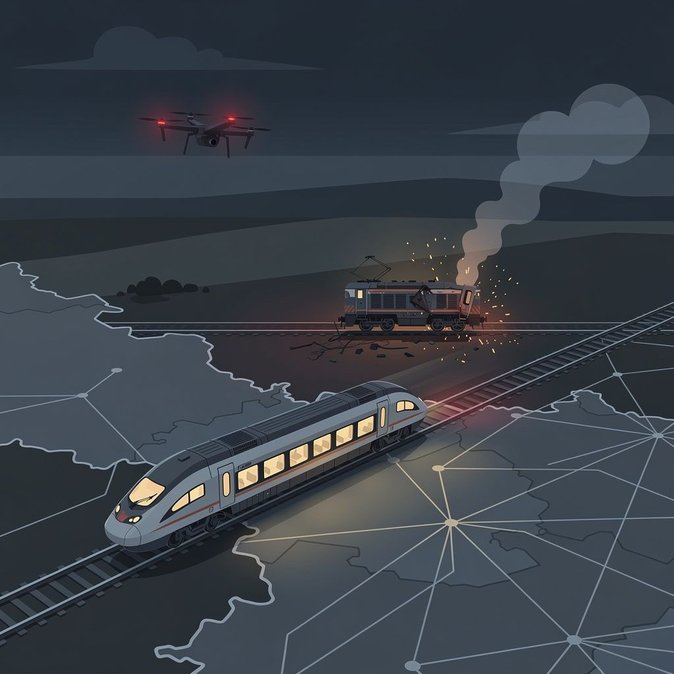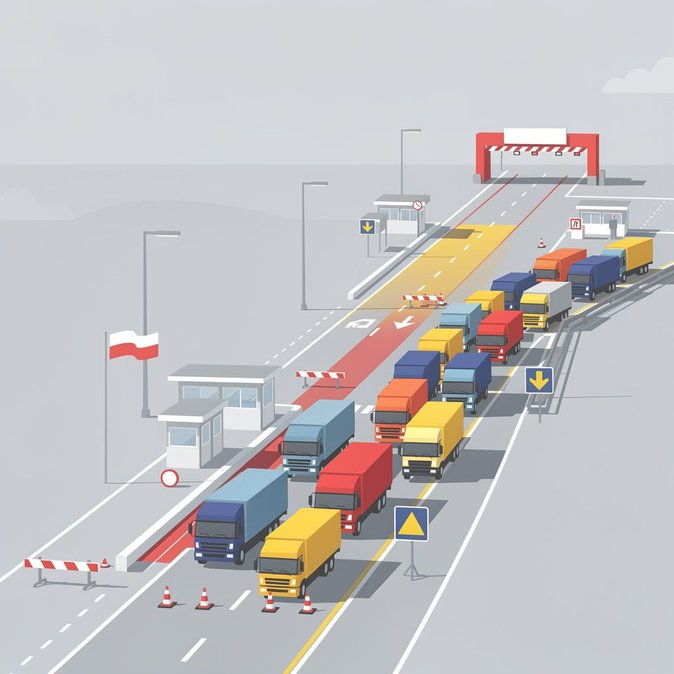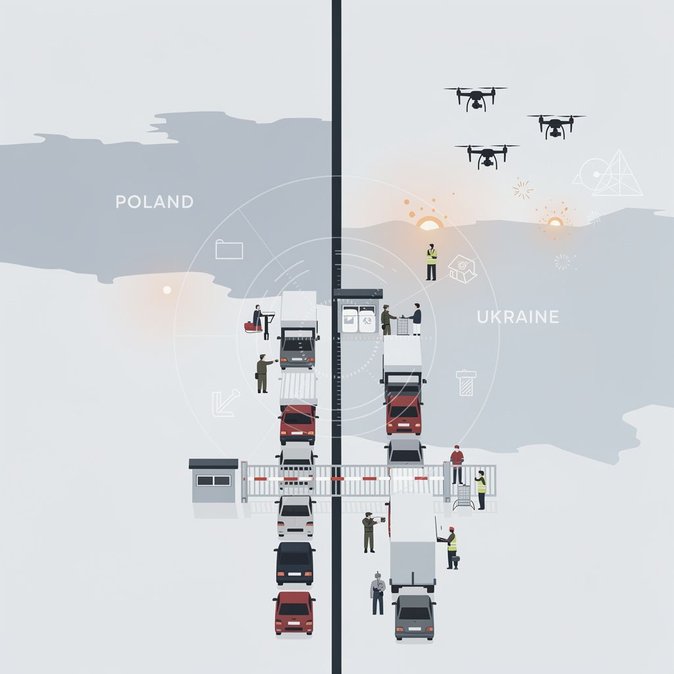
Poland awoke on 14 September to a new, more muscular border-security posture. In an emergency meeting convened overnight in Warsaw, Prime Minister Donald Tusk ordered the military, police, Border Guard and customs service to operate under a single joint command along the 535-kilometre frontier with Ukraine. The decision follows a wave of Russian Geran-5 drone attacks in western Ukraine during the night of 12-13 September, two of which detonated within kilometres of Polish territory. One strike hit a locomotive on the Kyiv-Warsaw passenger service at Yahodyn station, forcing the closure of the Yahodyn–Dorohusk road-rail crossing for several hours. Although Polish airspace was not violated, F-16s, helicopters and an airborne-early-warning SAAB 340 patrolled the border for most of the night. Speaking just after midnight on 14 September, Tusk said congestion-control plans for fuel tankers and other high-risk cargo would be activated immediately to prevent kilometre-long queues that could become soft targets. Interior Minister Marcin Kierwiński confirmed that random vehicle checks would be stepped up and that every crossing now has a rapid-reaction unit on standby. For corporate mobility managers the message is clear: expect more checks, slower lanes and sudden closures on the Polish side of the Ukrainian corridor. While passenger processing times at Medyka, Hrebenne and Korczowa had fallen to pre-war averages over the summer, carriers should now build at least two extra hours into east-bound itineraries. Poland has also begun sharing real-time drone-tracking data with neighbouring Slovakia, Hungary and Romania. EU officials in Brussels confirmed that Warsaw’s actions remain inside Schengen rules on temporary border measures, but signalled that a fresh notification may be filed if the situation deteriorates further.
Source: Polskie Radio (English service)