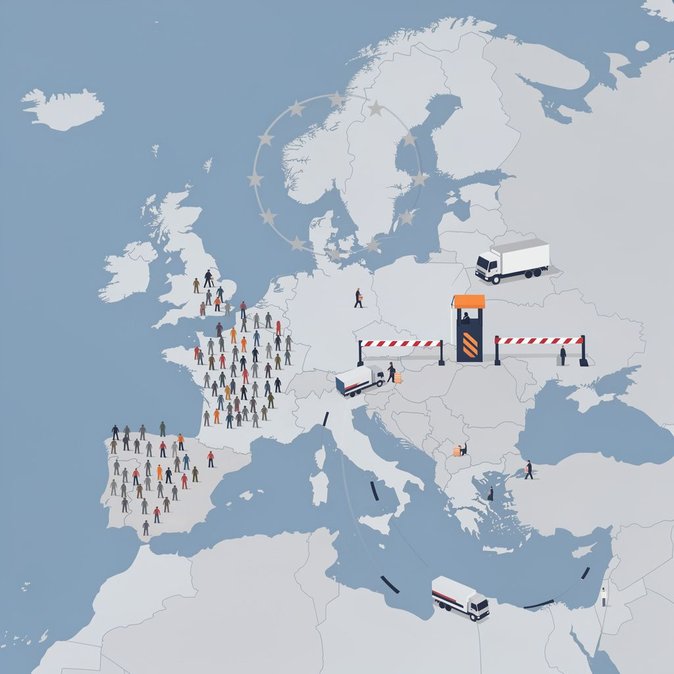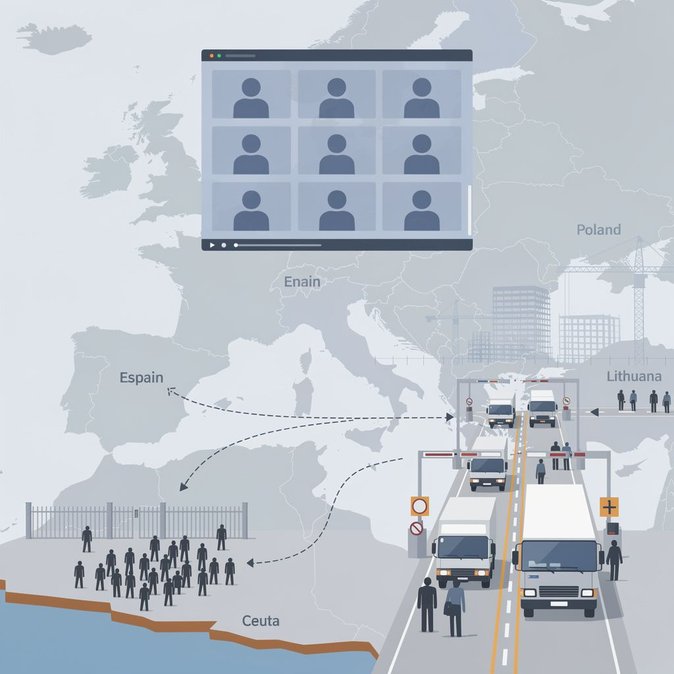
Interior ministers from all 27 EU member states – including Poland’s Mariusz Kamiński – met by videoconference on 4 August 2026 to discuss last week’s unprecedented mass entry of an estimated 50 000 migrants into the Spanish enclave of Ceuta. The extraordinary meeting was convened by Ireland, which holds the rotating EU Council presidency, after Madrid warned that the incident exposed vulnerabilities in the bloc’s external and internal borders. In the run-up to the talks Poland joined 21 other member states in signing a joint letter urging the European Commission to step up support for frontline countries and to clamp down on national measures that could act as a “pull factor”. Although the letter did not name Spain directly, it criticised “broad regularisation programmes” that, according to signatories, risk incentivising irregular movement. Warsaw has consistently argued that robust deterrence and physical barriers – such as the steel wall on its own border with Belarus – are essential to EU security and to maintaining confidence in Schengen. During the videoconference Minister Kamiński reiterated Poland’s opposition to any mandatory relocation of asylum seekers, a provision foreseen in the EU Pact on Migration and Asylum that is due to enter into force in 2026. He instead backed proposals for more systematic use of Article 25 of the Schengen Borders Code, which allows temporary re-introduction of controls at internal borders, and called for “concrete operational assistance” from Frontex and Europol. For businesses operating in Poland the debate has immediate practical implications. The government has already prolonged spot checks on its borders with Germany and Lithuania until at least October 2026, meaning longer transit times for lorry drivers and business travellers. Firms that rotate staff through Poland should also be ready for more rigorous document inspections at airports and land crossings if additional measures are adopted in the wake of the Ceuta incident. Looking ahead, global-mobility managers should monitor whether the Commission accepts the ministers’ request for accelerated funding under the €1.4 billion Border Management Facility. If approved, this could finance further infrastructure on Poland’s eastern frontier and new biometric systems at Warsaw-Chopin Airport, potentially changing passenger flows again in 2027.
Source: Le Monde