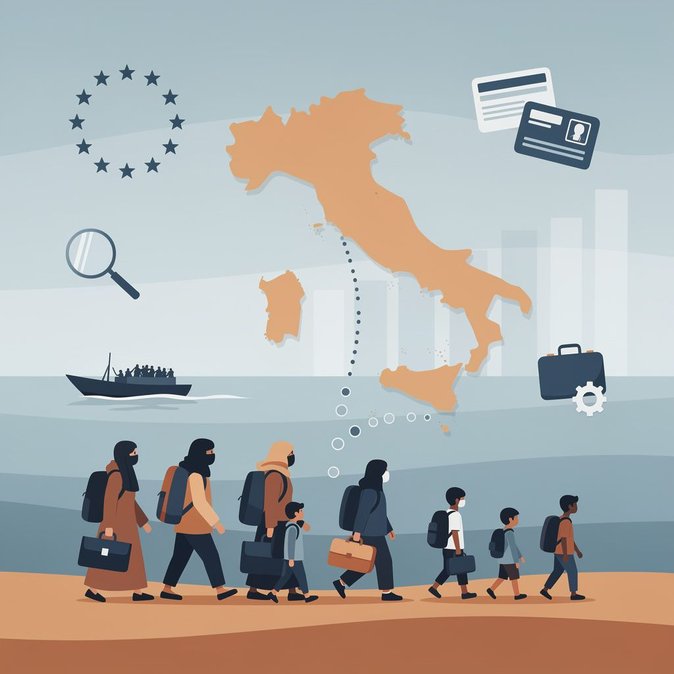
New Interior Ministry figures released on 14 September show that 21 393 people have reached Italian shores by sea since 1 January, a slight uptick on the same period last year despite tougher surveillance in the central Mediterranean. Of those arrivals, 19.6 % (4 194 individuals) are unaccompanied minors, underscoring the growing protection challenge for regional authorities already struggling with accommodation capacity. Bangladesh remains the leading country of origin (5 424 arrivals), followed by Somalia, Algeria, Sudan and Pakistan. NGO rescue operators attribute the diversification of routes to intensified crack-downs in Libya and Tunisia, which push smugglers to embark from Algeria and even Syria-controlled ports. The average boat now carries 58 people, up from 42 in 2025, reflecting smugglers’ attempts to offset higher interception risks with economies of scale. For Italy’s global-mobility ecosystem the statistics matter because they feed directly into policy debates over visa quotas (decreto flussi) and residence-permit backlogs. Employer federations in agriculture and hospitality argue that expanding legal labour channels would reduce irregular flows, while NGOs counter that complex bureaucratic hurdles deter would-be seasonal workers from applying through official programmes. In practical terms, companies employing third-country nationals should expect stricter document checks during residence-permit renewals as prefectures tighten fraud screening. HR teams are advised to schedule appointments well before current permits expire and to monitor forthcoming Ministry of Labour guidelines linking flussi quotas to regional labour-shortage data. At EU level, the numbers will feed into the Asylum and Migration Management Regulation’s burden-sharing formula, due for its first quarterly test in October. Whether additional relocation pledges materialise could influence Italy’s willingness to lift current Schengen restrictions, including the newly extended controls on travellers from Spain.
Source: AgenSIR