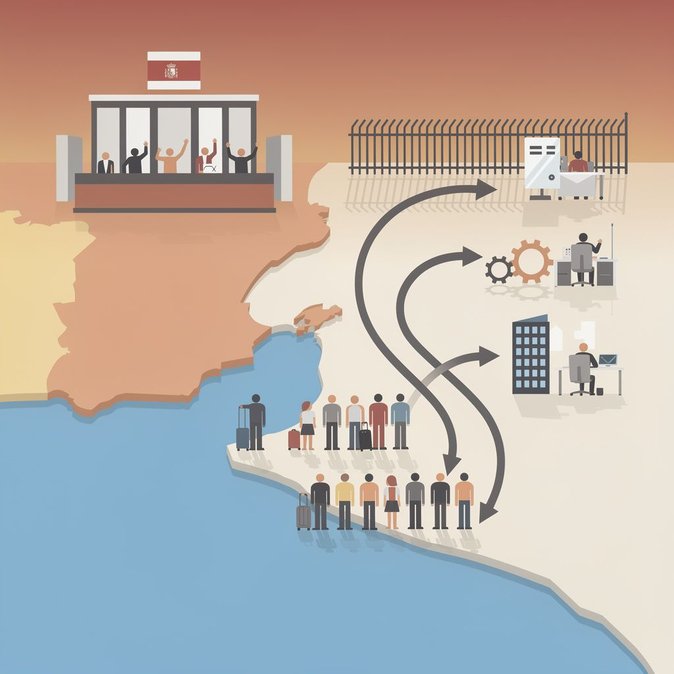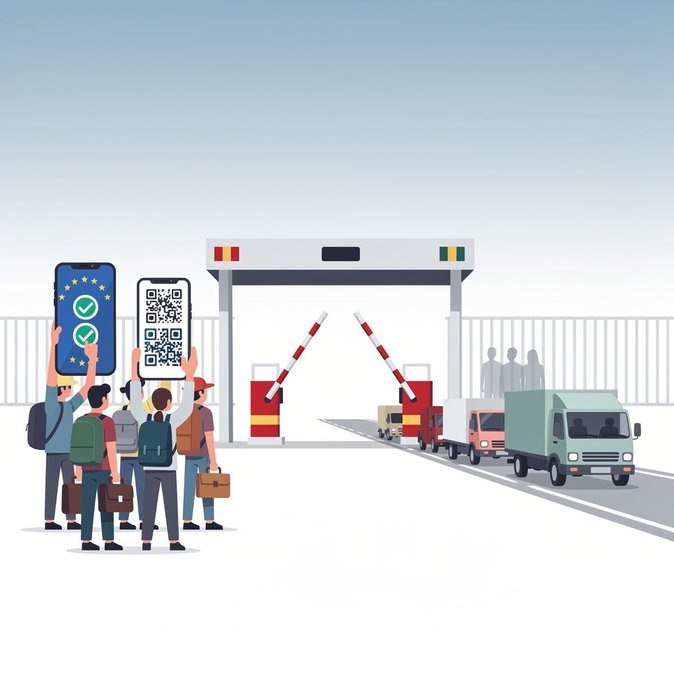
The Spanish government quietly rolled out an English-language interface for its ‘Plataforma ONE’ immigration portal on 16 September, allowing non-Spanish speakers to file and track the new digital-nomad residence permit entirely online. The upgrade covers initial visa applications, in-country status changes and renewals, with two-factor authentication via Spain’s Cl@ve system. Under Spain’s Startup Law, remote workers who earn at least 200 percent of the national minimum wage (€1,221 per month in 2026) can apply for a one-year visa, convertible into a three-year residence authorisation. Until now, many applicants relied on consular submissions or third-party “gestores” because the portal was available only in Spanish. The bilingual rollout is expected to speed up processing times by reducing documentation errors: roughly 28 percent of applications were being returned for corrections, according to immigration-office statistics. Early adopters report that the portal now auto-validates passport cryptographic signatures and accepts secure uploads of FBI-apostilled background checks—previously a pain point for U.S. freelancers. Legal advisers caution applicants to maintain offline copies; the system does not yet issue full PDF receipts, only QR-coded confirmation pages. Employers sponsoring intra-corporate transferees may also use the platform to switch assignees from Highly Qualified Professional permits to the more tax-advantaged digital-nomad regime, provided the employee will perform most duties for entities outside Spain.