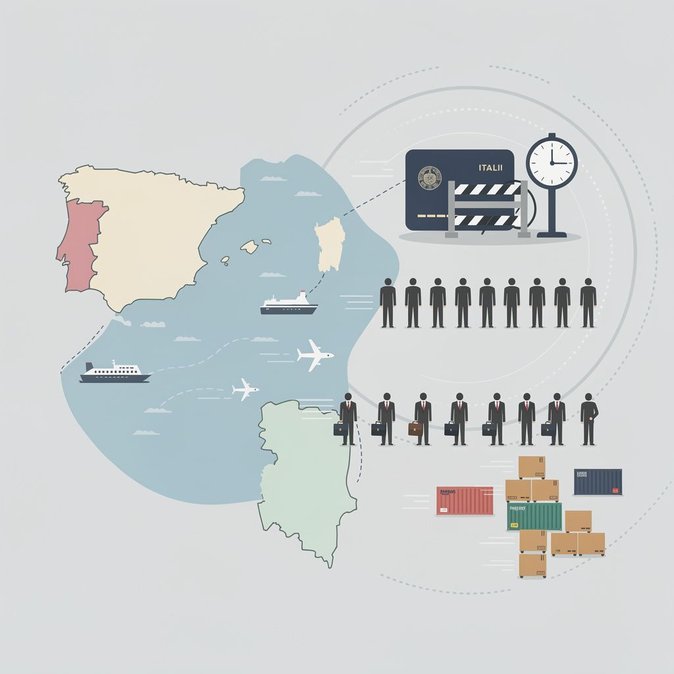
Italy has prolonged the extraordinary border controls it re-introduced on travellers arriving from Spain on 1 August, citing “continued threats to public order and the management of migration flows” following the late-July mass entry of more than 70,000 migrants into Ceuta. The new extension, announced on 15 September, keeps passport checks in place at all Italian airports and seaports serving flights and ferries from Spain until at least 30 September. For Spanish and multinational firms that depend on the high-frequency Barcelona-Milan and Madrid-Rome corporate corridors, the news means longer queues at Italian arrival halls, random secondary inspections and the loss of trusted-traveller privileges such as e-gates. Airlines have already advised passengers to allow two additional hours for border formalities, while freight forwarders warn of potential delays for time-critical “hand-carry” components destined for Northern Italy’s manufacturing belt. The measure effectively suspends Schengen free movement for Spain-Italy routes for a second consecutive month and raises questions about proportionality under Article 25 of the Schengen Borders Code, which requires any re-introduced control to be strictly time-limited and regularly reviewed. Madrid has so far opted for a diplomatic response, avoiding tit-for-tat checks on Italian arrivals, but the foreign ministry said it “reserves the right to act to protect Spanish interests” if the controls become permanent. Travel-risk managers should update automatic travel approvals: employees transiting through Rome-Fiumicino or Milan-Malpensa from non-Schengen hubs now need sufficient passport validity and, where relevant, multi-entry Schengen visas that cover both Spain and Italy. Spanish nationals resident abroad should also be prepared to show proof of onward travel and accommodation, as Italian border police have stepped up documentation scrutiny.
Source: El País