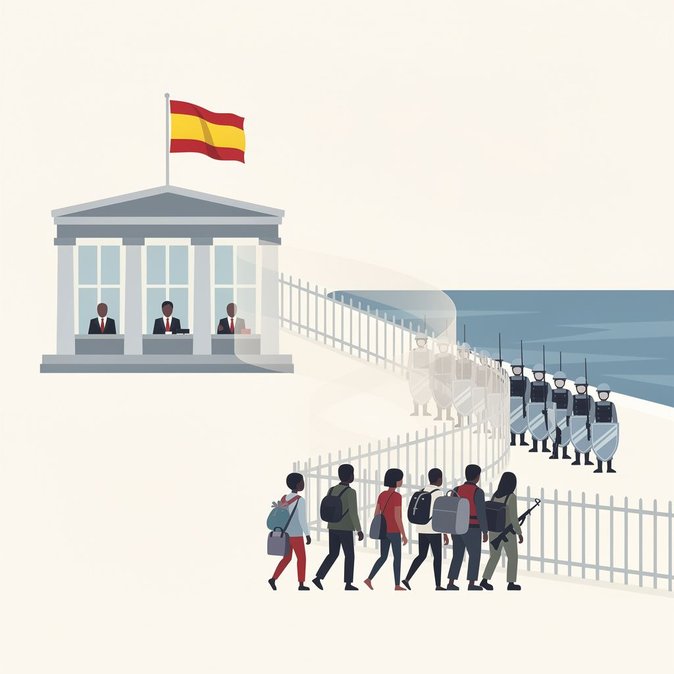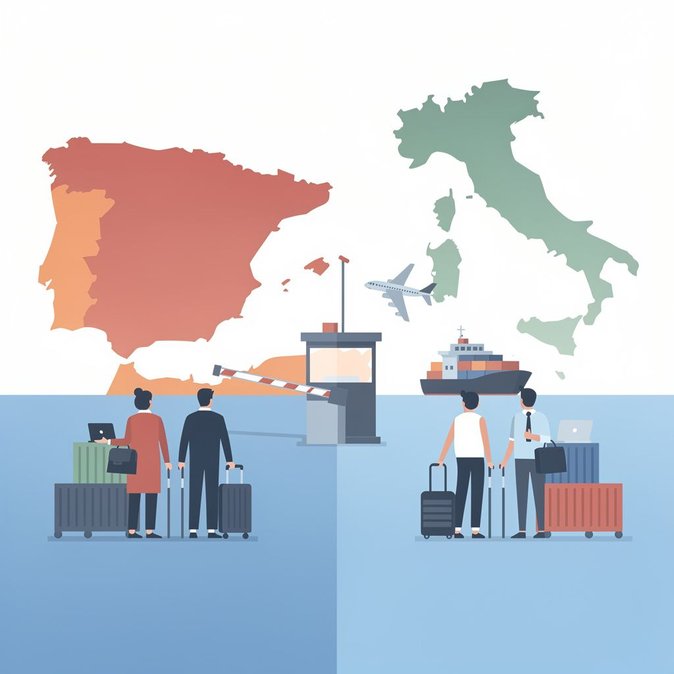
Travellers moving between Spain and Italy will face at least two more weeks of passport inspections after both governments simultaneously prolonged the extraordinary border controls they re-introduced in early August. Rome first suspended normal Schengen free-movement rules for passengers arriving from Spain on 1 August—hours after more than 72,000 people crossed en masse into the Spanish enclave of Ceuta from neighbouring Morocco. Italy justified the measure on national-security grounds, citing the risk of ‘possible terrorist infiltration’. Madrid responded in kind on 8 August by re-imposing police checks at Spanish airports and seaports handling direct traffic from Italy. The Spanish Interior Ministry confirmed on 15 September that these reciprocal inspections will now stay in force until at least 8 October, matching Italy’s own 15-day extension announced by Interior Minister Matteo Piantedosi. Both governments have notified the European Commission, as required under Article 25 of the Schengen Borders Code, but critics note that the rolling extensions are pushing the limits of what the Code considers an ‘exceptional and strictly time-limited’ measure. For business travellers—and the many Spanish and Italian firms whose executives regularly commute between Madrid, Barcelona, Milan and Rome—the controls mean longer queues, mandatory ID checks and potential secondary screening even on intra-EU flights and ferries. Airlines such as Iberia and ITA Airways are urging passengers to arrive earlier and to carry proof of onward travel and accommodation, as officials have reportedly asked some travellers to document the purpose of their trip. Air-cargo operators are also experiencing delays because customs officers are using the temporary regime to perform spot inspections of express consignments. Politically, the extension underscores how July’s Ceuta crisis continues to reverberate across Europe. Spain’s Foreign Minister José Manuel Albares denounced the Italian decision as ‘absurd and damaging to EU solidarity’, while Italian opposition parties accuse Prime Minister Giorgia Meloni of using migration fears to outflank the far-right Futuro Nazionale party. EU Home-Affairs officials have so far refrained from launching an infringement procedure, but analysts warn that prolonged internal border checks could invite legal challenges from affected businesses under freedom-of-movement rules. In practical terms, travellers should expect manual document control at the gate on both ends of the route, random baggage screening and possible police interviews. Companies with time-sensitive assignments should factor in an extra 30–45 minutes at departure and arrival points and consider carrying invitation letters or work orders. Mobility managers are advised to brief Italian and Spanish assignees on Schengen over-stay calculations: days spent in Ceuta still count toward the 90/180-day rule, even if onward travel to Italy now involves a border check.
Source: Associated Press