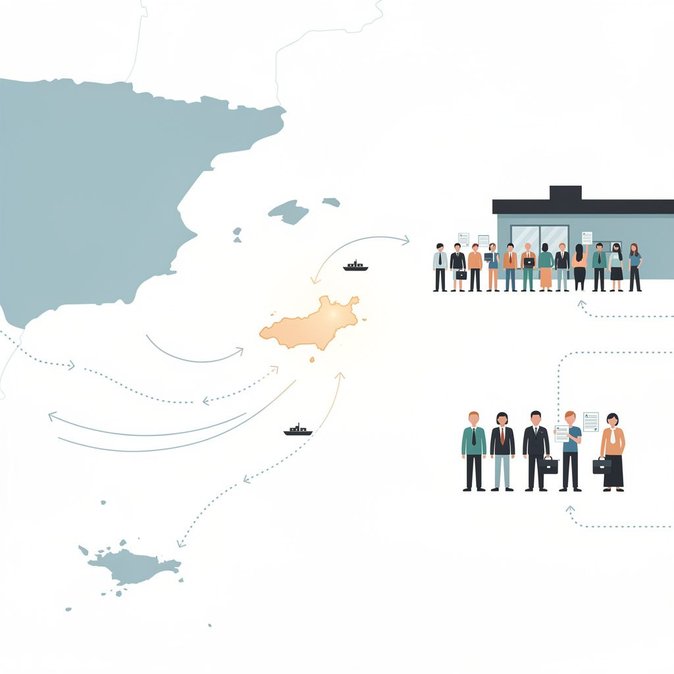
For the first time since records began, Spain’s Balearic Islands have registered more irregular sea arrivals than the Canary Islands, according to an Interior Ministry bulletin released 17 September. From 1 January to 15 September, 5,627 people reached the Balearics—35 more than the Canaries—via 303 small boats. Nationally, total irregular arrivals fell 16.5 % year-on-year to 21,906. The shift reflects changing smuggling routes as North-African networks exploit shorter crossings to Cabrera, Formentera and Mallorca to avoid reinforced Atlantic patrols off West Africa. Maritime Rescue staff in Palma report that some vessels depart Algeria’s Oran coast, carrying mixed groups that include potential labour migrants aiming for mainland Spain via domestic flights once released. Local authorities warn that reception capacity is strained: Palma’s temporary processing centre, designed for 120 people, has averaged 240 daily occupants this month. The Balearic regional government is lobbying Madrid for extra funding and is asking airlines to alert police to one-way bookings made shortly after migrant releases. For companies, the trend may affect seasonal hiring. Hospitality employers on the islands see a potential pool of work-eligible migrants once procedures conclude, but delays in issuing NIE numbers and social-security registration could create bottlenecks. Mobility teams should monitor processing times and ensure compliance when hiring third-country nationals who arrived irregularly but later obtain work authorisation.
Source: Europa Press