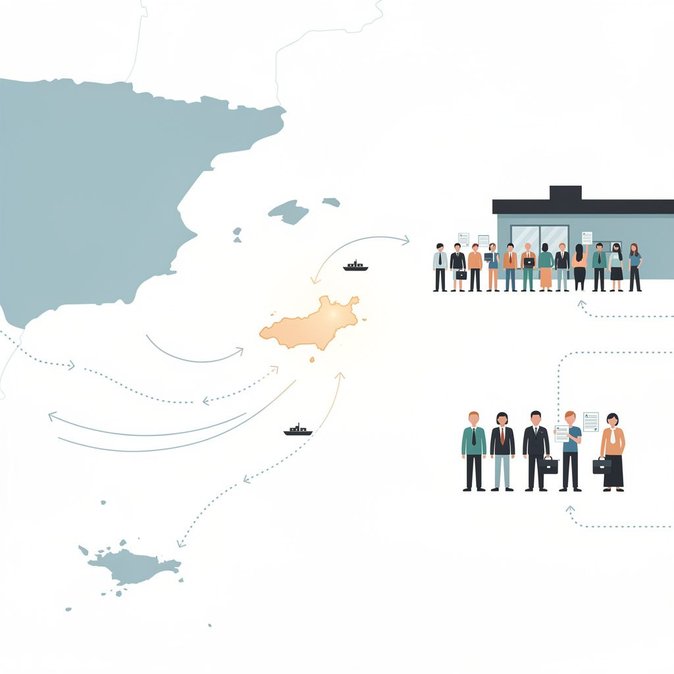
Spain’s Interior Minister Fernando Grande-Marlaska used a 17 September meeting in Madrid with EU Home-Affairs Commissioner Magnus Brunner to demand legislative reform that would allow Member States to accelerate both return orders and decisions on international protection during large-scale arrivals. The move comes six weeks after nearly 80,000 people crossed from Morocco into the Spanish city of Ceuta over two days, overwhelming reception facilities and forcing Spain to re-introduce temporary border controls. Grande-Marlaska argued that today’s EU tool-kit—built around the Return Directive, the Dublin rules and the 2020 Migration Pact proposal—“lacks an emergency gear”. He wants a new “crisis protocol” that would let frontline states shorten appeal deadlines, use simplified return notices and deploy joint EU screening teams within 48 hours of any mass entry. Spain is also asking Brussels to earmark extra asylum and border-management funds specifically for territories with unique geographical constraints such as Ceuta and Melilla. During the meeting Brunner confirmed that the Commission has already approved €114.7 million in emergency funding under the Asylum, Migration and Integration Fund to expand reception capacity in both enclaves. Spanish officials said part of the money will finance two new 800-bed Temporary Attention Centres for Migrants (CATE) and reinforce the sea-wall at Benzú, where most crossings took place. For employers with mobile staff the message is two-fold: border spot-checks at ports and airports serving Ceuta are likely to remain in place until at least October, and political momentum is building for EU-wide rule changes that could, in future crises, shorten procedural timelines but also tighten work-permit issuance for irregular entrants. Companies moving talent to or through Spain should therefore review contingency plans and stay alert to Schengen-wide legislative proposals expected before year-end.