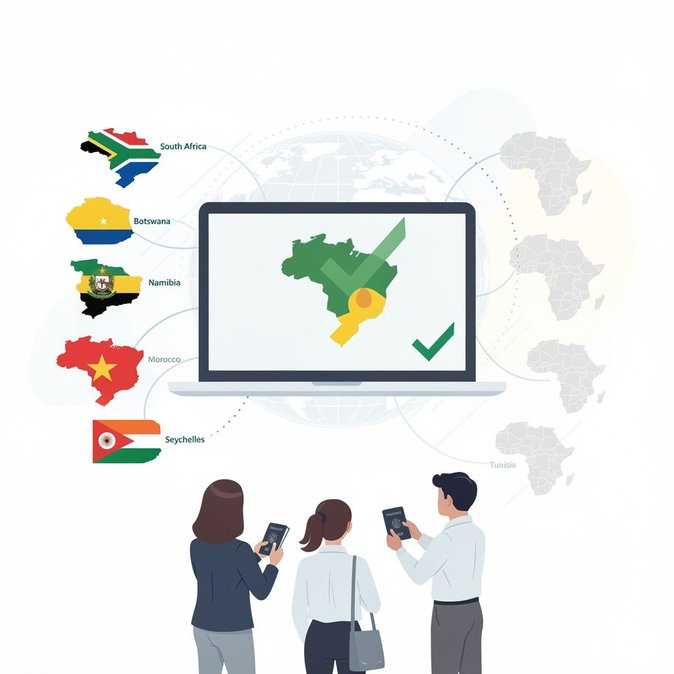
Brazil’s Ministry of Foreign Affairs quietly expanded its new electronic visitor-visa (eVisa) system to parts of the African continent this week, adding South Africa, Botswana, Morocco, Namibia, Tunisia and Seychelles to the list of nationals eligible to apply online instead of visiting a consulate. The update, reported on 18 September 2026 by the Nigerian outlet Peoples Gazette, took effect retroactively from 1 September and allows travellers from the six countries to upload documents through the Integrated Consular System (SCI) and receive a single-entry or multiple-entry eVisa by e-mail within ten working days. Successful applicants may stay up to 90 days per visit and 180 days per year (with a special 180-day per visit rule for Seychelles). The eVisa covers tourism, business meetings, artistic or sporting activities, short-term study and volunteer work, but it does not authorise employment. Fees remain the same as those charged at the consulate (currently US$80.90) but the online process removes courier costs and appointment backlogs. The decision is part of Brasília’s broader digitalisation drive, which already made the eVisa mandatory for US, Canadian and Australian nationals in April 2025 and for certain Asian countries earlier this year. For African businesses, the move lowers a significant barrier to engaging with Brazil’s growing consumer and commodities markets, particularly in the energy and agri-tech sectors where South African and Moroccan firms are actively prospecting. Nigeria and most other African nations, however, remain excluded. Travel-industry bodies in Lagos said they will lobby for inclusion, arguing that Nigeria is Brazil’s top West-African trade partner and home to its largest expatriate community on the continent. Until any change is announced, Nigerian passport-holders must still submit paper applications in person, with processing times averaging four weeks. Global mobility teams should update eligibility matrices and alert travellers from the newly admitted countries that eVisas must be printed and presented on arrival. Employers are also reminded that eVisa holders who plan to provide hands-on technical assistance or receive remuneration in Brazil will still need a temporary work visa.
Source: Peoples Gazette