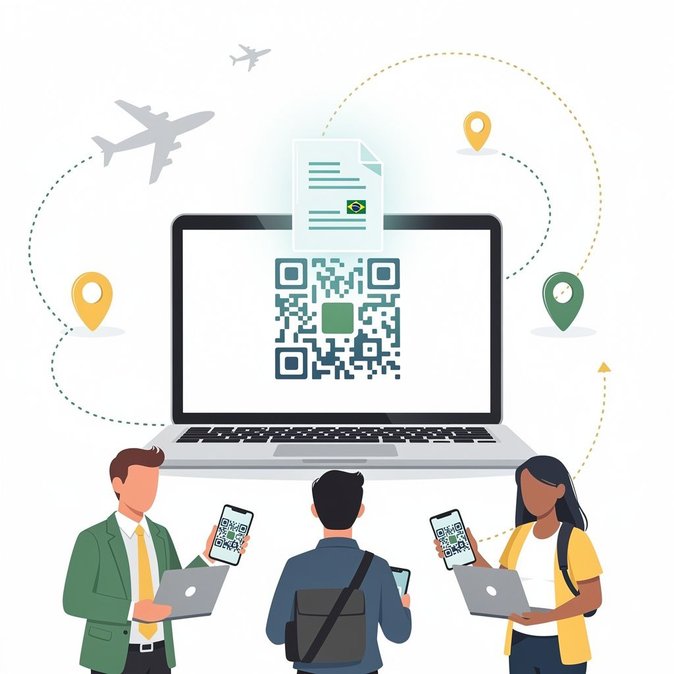
Brazil has quietly finished one of the biggest technological overhauls of its immigration system in a decade. As of 1 September 2026—but confirmed by officials and industry trackers on 16 September—the Ministry of Foreign Affairs is no longer affixing physical visa labels for any of the country’s temporary-stay categories (VITEM I-XIV) when the applicant is a national of a country that already enjoys Brazil’s 90-day visa-exemption for short visits (VIVIS). Instead, applicants upload documents, pay fees and receive the visa in PDF form via the Integrated Consular System (SCI) portal. The file carries an encrypted QR-code that border officers scan on arrival; travellers may show the code on a mobile device or as a print-out. The change covers the increasingly popular Digital Nomad Visa (VITEM XIV), work visas, intra-company transferees, student permits, family-reunion authorisations and several other sub-categories. According to a technical note circulated to consular posts, the on-line process should cut average issuance times from 10 working days to “as little as 48 hours” once biometrics and security checks are cleared. Crucially, applicants no longer need to surrender their passports—removing a major pain-point for business travellers whose documents are often needed for multiple trips in a single quarter. For global mobility managers the implications are significant. Companies that rotate staff in and out of Brazil can now run overlapping immigration and travel schedules, because employees keep physical control of their passports. HR teams should, however, verify that each consulate on their mobility lane has activated the digital function; a handful of missions—particularly in Africa and parts of the Middle East—still ask for postal submissions while local IT is upgraded. Organisations should also update pre-departure checklists: inbound assignees must print the PDF if their first Brazilian airport has limited mobile-data coverage, and they must still register with the Federal Police within 90 days of entry where required. The move is part of a broader government push to modernise border controls ahead of an expected tourism surge linked to the 2027 FIFA Women’s World Cup, for which Brazil is currently the front-runner host. The Foreign Ministry has hinted that a similar QR-code system could be extended to visitor e-visas for US, Canadian and Australian passport holders when those programmes are renewed next year—potentially making Brazil’s visa platform one of the most fully digital in the region.
Source: Stamped Nomad