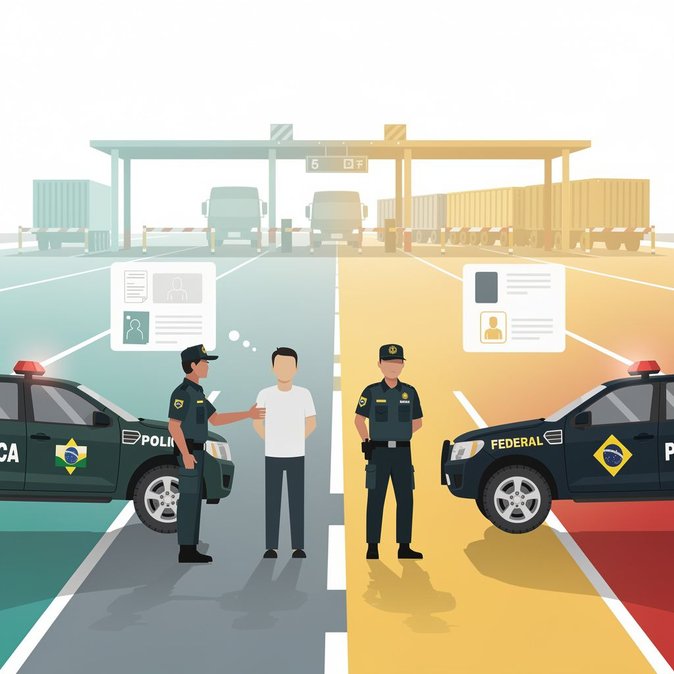
Brazil’s Federal Police (PF) used the Guajará-Mirim land crossing in Rondônia on 18 September to receive and immediately arrest a Brazilian drug-trafficking suspect expelled by Bolivian migration authorities. The bilateral operation, detailed in a PF communiqué, illustrates how Brasília is intensifying operational links with neighbours to curb illicit flows without hampering legitimate trade and travel. Two outstanding warrants from courts in Ji-Paraná and Pimenta Bueno were executed within minutes of the suspect’s return to Brazilian soil. Officers from Bolivia’s FELCC and Interpol Guayaramerín escorted the man to the frontier post after Bolivian migration services determined his stay in Beni department to be irregular. The swift extradition-style procedure avoided the lengthy formalities of traditional renditions and relied on a 2025 protocol that lets police chiefs on both sides authorise daytime transfers for high-risk detainees. For logistics providers and multinational companies that move staff or cargo through the Amazonian corridor, the case signals that documentation checks are likely to be stepped up in coming weeks. PF units in Rondônia told local press that they will increase random inspections of commercial vehicles to intercept fugitives who may attempt to exploit porous jungle crossings. Employers are therefore advised to ensure that drivers carry apostilled corporate letters, proof of cargo manifests and vaccination records, as officials have discretion to detain vehicles until identities are verified. Mobility teams moving expatriates by road between Porto Velho and Santa Cruz de la Sierra should also pad schedules in case of spot-checks. While the operation focused on law-enforcement cooperation, authorities emphasised that streamlined data sharing—not additional physical barriers—is the preferred tool to secure the border. The policy balance between security and fluidity is critical for cross-border value chains in agribusiness and mining that depend on predictable trucking lanes between Brazil and Bolivia.
Source: Polícia Federal