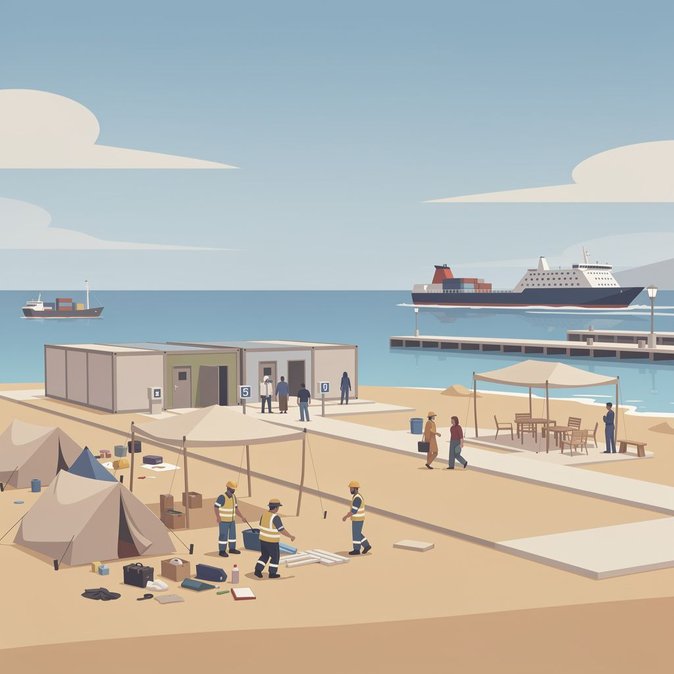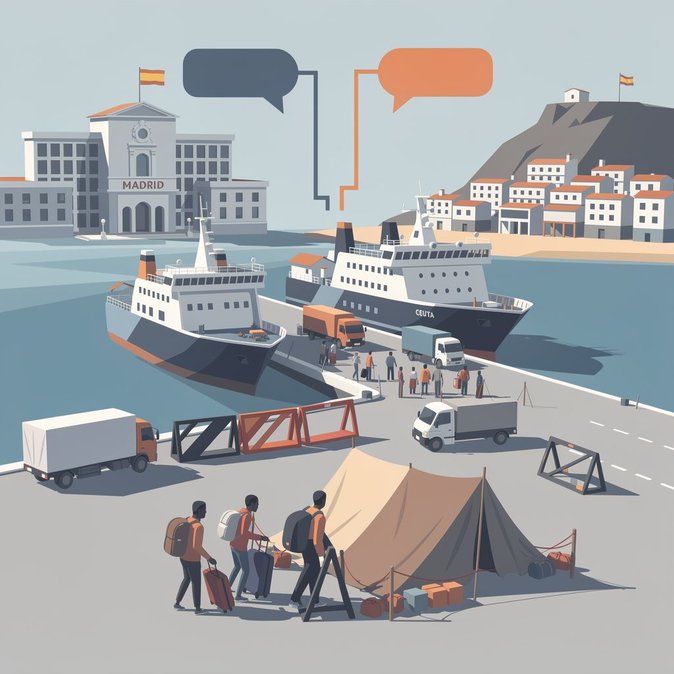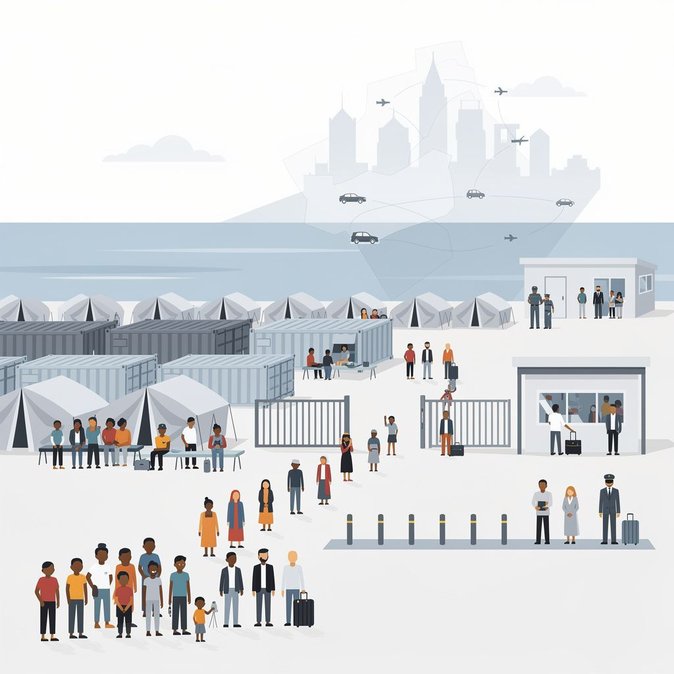
Fifty days after an estimated 12,000 people surged across the break-water that separates Ceuta from Morocco, the Spanish enclave is still scrambling to give the newcomers dignified shelter and legal clarity. According to an on-the-ground report by El País, more than 10,000 men, women and children remain scattered between hastily opened reception centres, requisitioned warehouses and a growing number of makeshift camps on beaches and vacant lots. Local authorities have converted sports halls, army barracks and even a disused fair-ground into emergency accommodation, yet capacity lags demand. Civil-society groups warn that sanitation and medical services are overstretched; the regional hospital exceeded 110 % occupancy last week, and NGOs report outbreaks of scabies and gastro-intestinal infections. Madrid has dispatched additional asylum-case officers and pledged €114 million in EU emergency funding to build two permanent 800-bed identification centres—one in Ceuta, the other in Melilla—but those facilities will not open before early 2027. In the meantime, triage teams try to separate asylum applicants from people who may qualify for humanitarian return programmes, while unaccompanied minors—nearly 2,000 by official count—remain under the city’s guardianship. For employers that rely on seasonal North-African labour, the bottleneck is already disrupting hiring plans for the upcoming citrus harvest. Immigration lawyers also note a surge in companies asking how the crisis might affect intra-corporate transfers through Spain’s entrepreneur law permits. Businesses with posted workers in Ceuta face security restrictions that limit movement after dusk. The situation underscores the fragility of Schengen’s internal-border politics: Spain has re-imposed checks on sea and air links with Italy until at least 22 September, while Italy continues spot checks on Spanish arrivals. Mobility managers should anticipate ID inspections and potential delays on all routes touching the enclave or mainland ports servicing it.
Source: El País