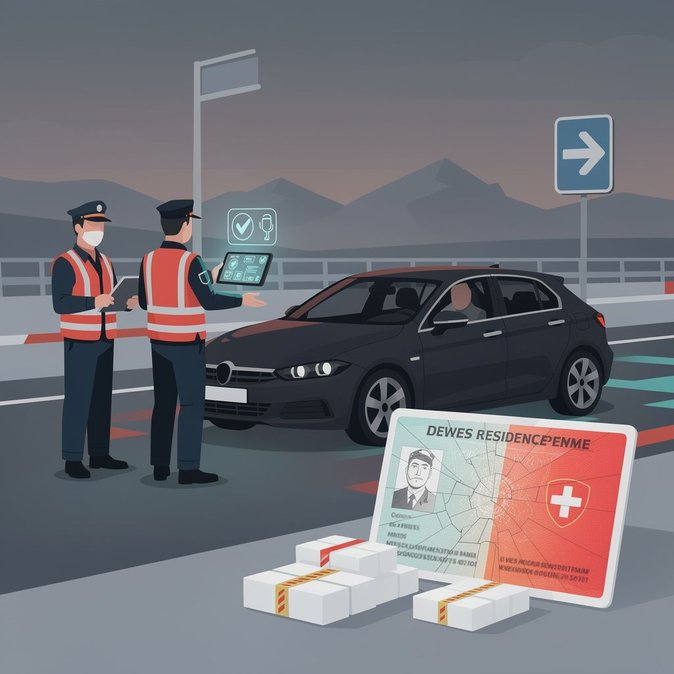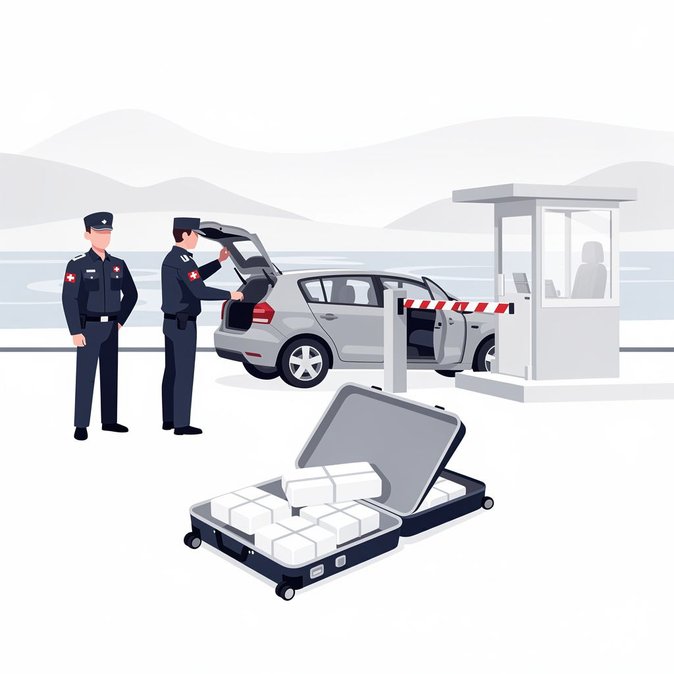
A mobile patrol of the Federal Office for Customs and Border Security (BAZG) intercepted a Swiss-registered car near the Rhine bridge at Mumpf AG and discovered two packages containing roughly 2.5 kilograms of cocaine concealed behind the centre console. The 40-year-old German driver, who lives in Switzerland, was already wanted on an arrest warrant and was carrying forged Swiss residence and driving documents. The seizure, announced Monday, illustrates the growing role of Swiss inland crossings as conduits for trans-Alpine drug smuggling. Traffickers increasingly favour secondary roads and small bridges to avoid the permanent checkpoints on the main A3 motorway. Under Schengen rules, customs officers may carry out mobile controls within 20 kilometres of the internal border. BAZG says it has intensified spot checks since August after noting a 12 percent rise in narcotics interceptions compared with the same period last year. For companies running cross-border shuttle services or using just-in-time trucking from Germany, the uptick in controls can mean unexpected delays. Logistics managers should factor extra time into schedules and ensure drivers carry correct identification and work-permit documents, as officers often combine smuggling checks with immigration compliance audits. Monday’s case has been handed to the Aargau cantonal police and the public prosecutor’s office. If convicted, the driver faces up to 20 years in prison under Switzerland’s Narcotics Act.
Source: SWI swissinfo.ch