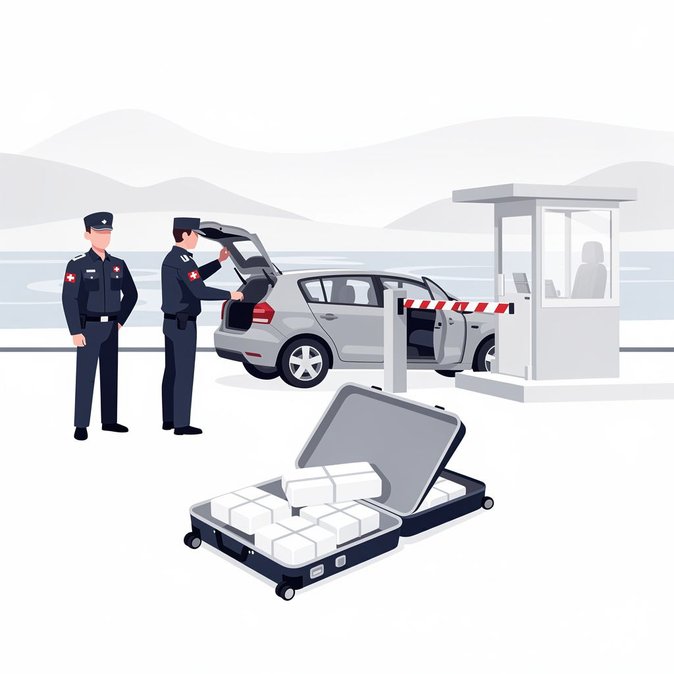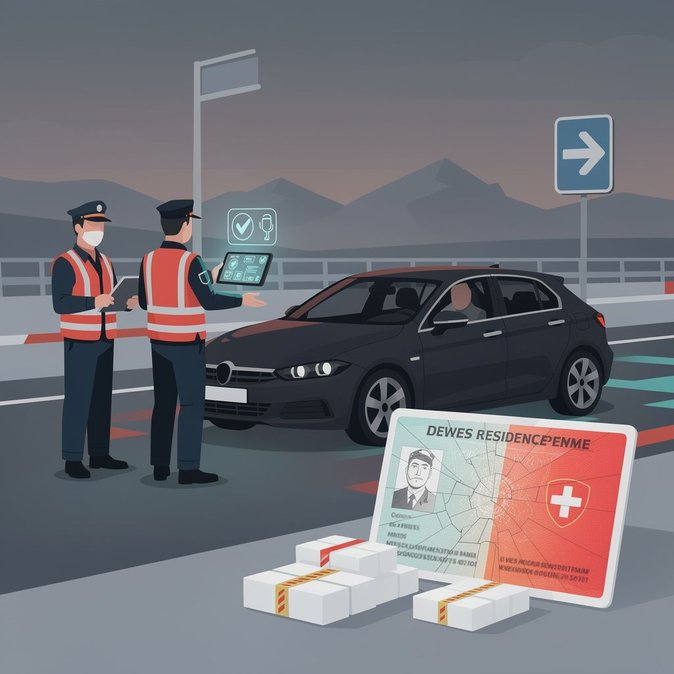
Border security intensified on 21 September 2026 when officers of the Federal Office for Customs and Border Security (BAZG) stopped a car near Mumpf, canton Aargau. Inside they discovered two packages containing a total of 2.5 kilograms of cocaine concealed in the centre console. The 40-year-old German driver was also carrying a forged Swiss residence card and a counterfeit Swiss driving licence. The incident underscores Switzerland’s dual focus on combating cross-border crime and document fraud. BAZG notes that its digital-transformation programme “DaziT” is enabling more risk-based checks by connecting licence-plate scanners, customs declarations and criminal databases in real time. Officers were alerted by discrepancies between the electronic vehicle record and the driver’s physical papers. For international assignees and frequent travellers, the case is a reminder that forged visas or residence permits are increasingly easy for authorities to detect—and that penalties are severe. Carrying falsified documents can lead to immediate detention, a multi-year entry ban and employer liability if the traveller is on assignment. BAZG says information from the seizure will feed into the Schengen Information System (SIS II) and the Entry/Exit System (EES), potentially triggering closer scrutiny of vehicles on the German and French borders. Companies moving goods or staff through northern Swiss crossings should anticipate intermittent delays as spot checks are intensified over the next few weeks. Mobility managers should verify that all staff hold valid, machine-readable residence cards and should budget extra travel time for road transfers between Basel, Zurich and southern Germany during the heightened control period.