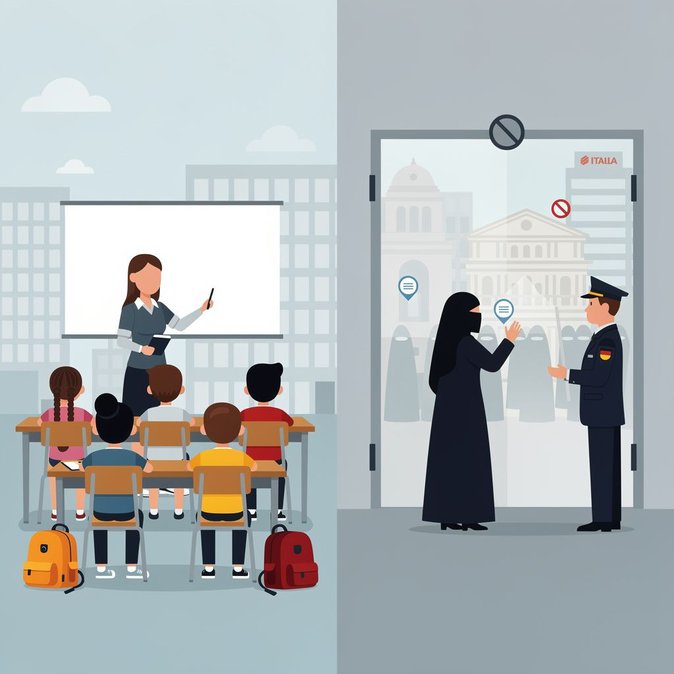
Speaking at the youth conference “Fenix” on 20 September, Prime Minister Giorgia Meloni announced that the cabinet will shortly consider a bill imposing a maximum quota of foreign pupils per class, obliging migrant parents with integration difficulties to attend Italian-language courses and prohibiting the wearing of burqas and niqabs in all educational institutions. Although framed as an education measure, the draft law has direct immigration implications: schools often act as a gateway to family-reunification permits and long-term residency. By linking parental language competence to a child’s right to schooling, the government aims to accelerate integration but risks litigation over discrimination and religious freedom. Business associations are divided. Multinationals with diverse workforces fear that restrictive classroom caps could complicate relocations of executives with school-age children, particularly in metropolitan areas where international enrolment already exceeds 30 %. Conversely, small-town employers in northern Italy welcome the initiative, arguing that excessive concentrations of non-Italian speakers slow overall learning outcomes. The Interior and Education ministries are drafting impact assessments; early leaks suggest a ceiling of 25 % non-Italian citizens per class and fines of up to €5,000 for schools that breach the limit. If approved, the rules would take effect from the 2027/28 academic year, giving school boards one year to adjust catchment areas and hire language-support teachers.
Source: ANSA