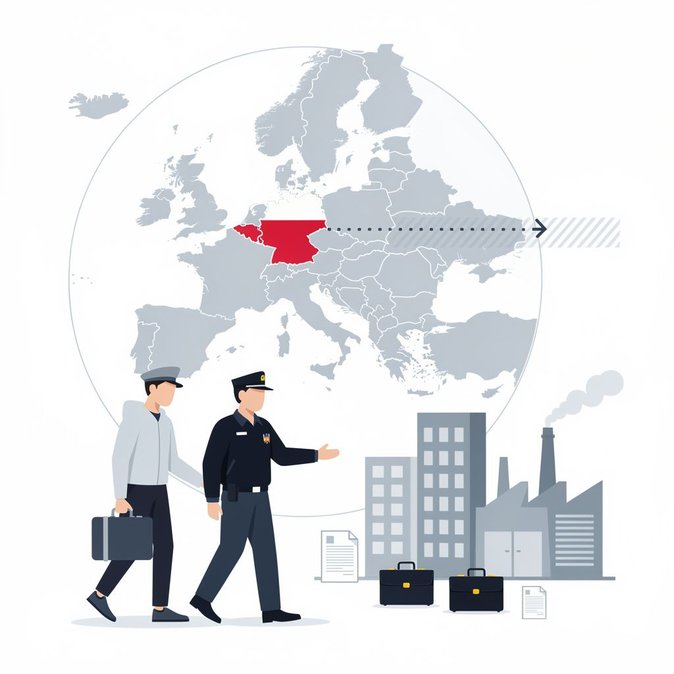
A 32-year-old Ukrainian national with an extensive criminal history has been deported from Poland following a joint operation between the Bytom police and the Ruda Śląska Border Guard station. The man, arrested on narcotics charges on 18 September, had multiple prior convictions for drug possession, assault, theft and fraud. Border Guard headquarters confirmed on 21 September that he was escorted to the Ukrainian border and issued a five-year Schengen-wide re-entry ban. The case illustrates Poland’s sharpened focus on public-order removals. Since amended legislation entered into force in April 2026, regional commanders can fast-track expulsion procedures against non-EU citizens deemed threats to security, bypassing lengthy court hearings. Authorities report that 1,240 such deportations have taken place year-to-date, a 34 % increase over the same period in 2025. For employers of foreign staff, the message is unambiguous: any criminal activity—even minor drug offences—can now trigger immediate residence-permit revocation and a multi-year entry ban. Compliance teams should ensure that sponsored employees understand Polish criminal statutes and that HR is alerted quickly to any police contact. The development also reflects a broader EU move toward linking immigration status to public-order metrics. Germany, the Netherlands and Austria have introduced similar fast-track deportation rules in the past 12 months. Multinational firms should review internal mobility policies to account for diverging member-state enforcement thresholds. While the individual case may appear isolated, the underlying policy shift adds a layer of risk to assignments in Poland and calls for reinforced employee-conduct training.
Source: Polish Border Guard HQ