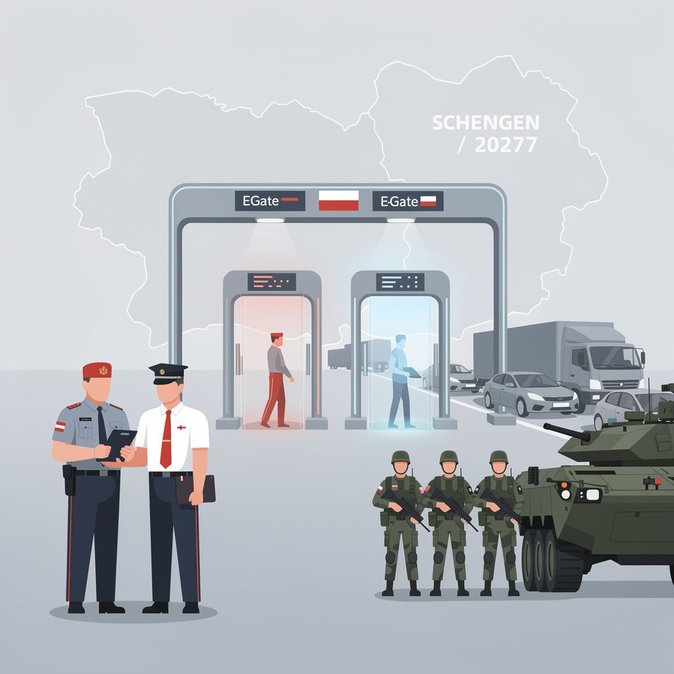
The government will unveil a dedicated Border Protection Task-Force at an 11:15 CET press conference on 22 September at the Dorohusk–Yagodyn crossing with Ukraine. Deputy Prime Minister and Defence Minister Władysław Kosiniak-Kamysz will appear alongside Interior Minister Marcin Kierwiński to outline how military engineers, customs officers and the Border Guard will coordinate surveillance, barrier maintenance and rapid-response units along Poland’s 1,200-kilometre eastern frontier. Officials close to the plan say the Task-Force will have a rotating strength of 2,000 personnel and an annual budget of PLN 450 million, financed partly through the EU’s Border Management Instrument. The move comes after a summer increase in attempted illegal crossings from Belarus and sporadic Russian drone incursions, though ministers insist the announcement is "preventive rather than reactive." For corporate mobility programmes the initiative matters because it signals Poland’s intention to keep temporary internal Schengen controls in place through at least Q1 2027. Companies moving goods or assignees by road from the Baltics to Poland should therefore expect spot checks to continue, especially on secondary roads in Podlaskie and Lubelskie voivodeships that have become alternative routes for people-smuggling. Analysts also anticipate that the Task-Force will accelerate rollout of e-Gate infrastructure compatible with the Entry/Exit System. Once installed, this should shorten processing times for compliant travellers, but only after an initial period of construction-related disruption at major checkpoints such as Dorohusk and Hrebenne.