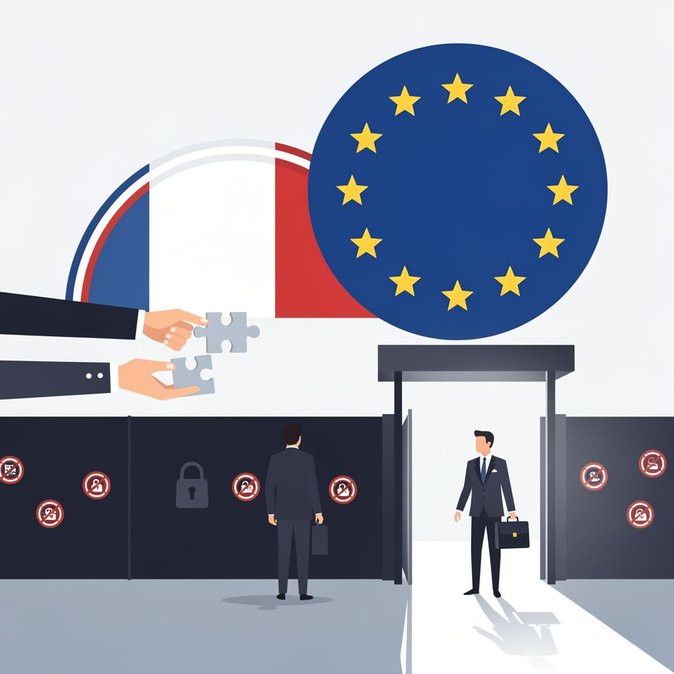
After marathon talks concluded late on 22 September, EU foreign ministers renewed the bloc’s Russia sanctions list for three years but, at France’s insistence, removed Alisher Usmanov and—at Luxembourg’s request—Mikhail Fridman. The decision means both businessmen regain the right to enter the Schengen Area, including France, and to unblock frozen assets. Diplomats told Le Monde that Paris cited unspecified “national-security interests”, reportedly linked to negotiations to free French nationals jailed in Azerbaijan. The move angered Ukraine and several northern EU states, which fear the precedent weakens travel-ban credibility. Practically, the delisting underscores that Schengen travel bans can be reversed and that carriers will again be able to board the two oligarchs without risk of fines. Immigration officers in France and other member states have already received updated SIS II alerts cancelling refusal-of-entry instructions. For multinationals, the change could revive dormant joint-ventures or board meetings previously impossible to hold in Europe, though banks must still conduct enhanced due diligence under anti-money-laundering rules. Legal experts warn that ongoing litigation by other sanctioned individuals may accelerate, potentially altering the mobility landscape for high-net-worth Russians in France’s luxury real-estate and yachting sectors.
Source: Le Monde