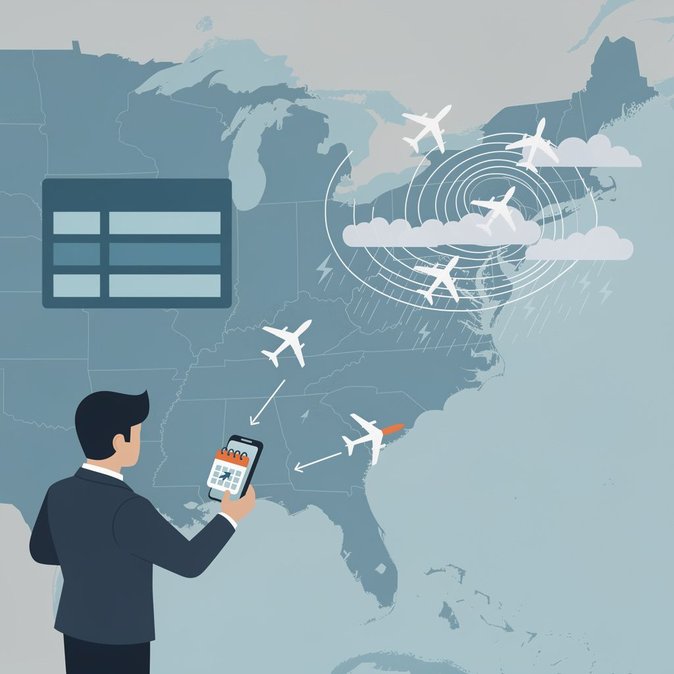
With meteorologists forecasting a powerful Nor’easter to sweep through New England this weekend, United Airlines on September 24 expanded its travel-waiver program to 11 airports, including Boston (BOS), New York-JFK, Newark (EWR) and Philadelphia (PHL). The waiver permits customers ticketed on United or United Express flights between September 25 and 27 to reschedule within a five-day window without change fees or fare differences, provided they travel between the same city pairs and cabin class. The carrier’s move is part of an industry-wide shift toward proactive, automated waiver rollouts that leverage real-time weather models. United has invested heavily in an AI-driven operations center that detects when predicted winds and precipitation cross threshold levels and triggers customer-notification workflows. The Reddit-based waiver tracker that surfaced the update shows an “expansion” flag at 09:05 EDT after PHL was added to the list. For corporate travel managers, the waiver creates immediate rebooking opportunities and may mitigate downstream hotel and per-diem costs. Companies should instruct travelers to adjust itineraries promptly, as seats on alternate flights can disappear quickly once a waiver posts. Travelers whose meetings are time-sensitive may opt for remote participation rather than risk same-day travel in deteriorating conditions. United’s contract of carriage still requires that the new flight depart no later than September 29, so longer deferrals will involve standard change rules. Similar waivers from Delta and American had not been issued at the time of writing, but are likely if the storm track remains on course for the busy Northeast corridor. The episode underscores the growing importance of automated waiver intelligence for mobility programs: real-time feeds from airlines and third-party aggregators can be integrated into travel-management systems to flag eligible PNRs and push mobile alerts to affected employees.