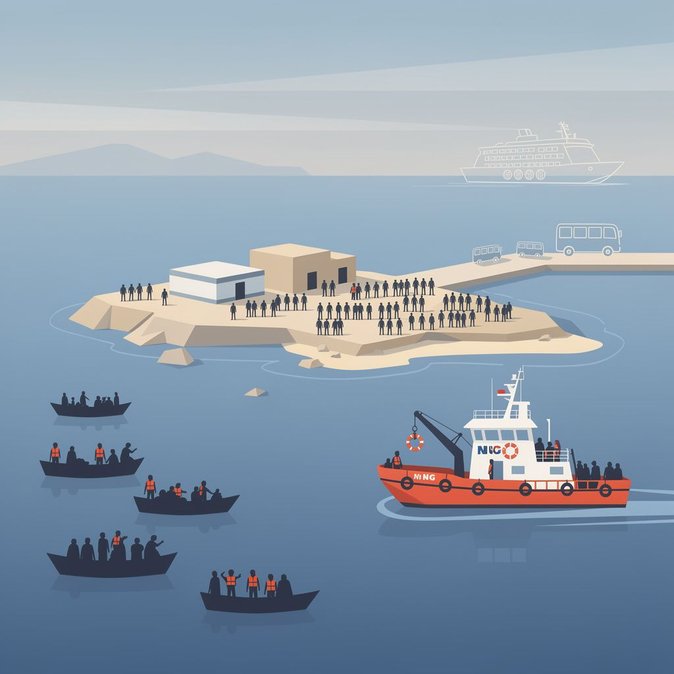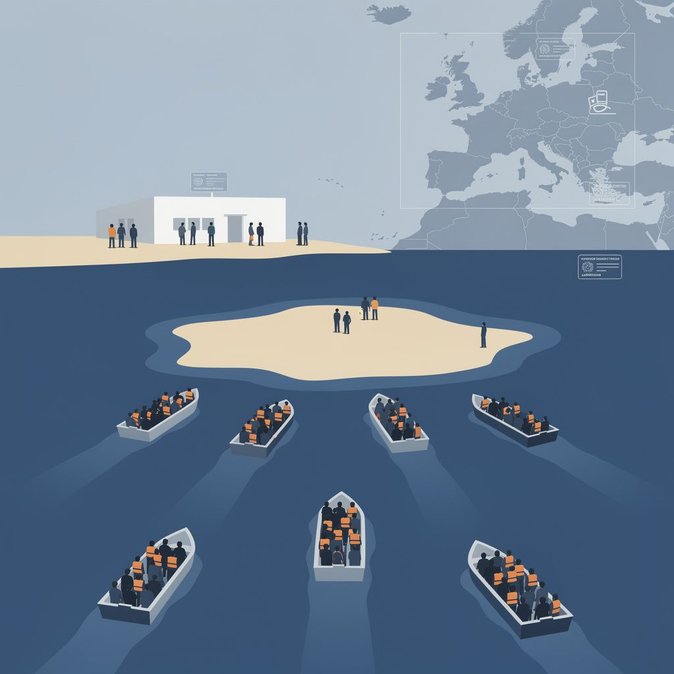
Sicily’s tiny island of Lampedusa experienced another surge in sea arrivals on 26 September, when the Coast Guard and Guardia di Finanza intercepted or escorted 11 small boats carrying a total of 674 people. According to local daily La Sicilia, landings took place throughout the day and night, with the largest single group—96 migrants from sub-Saharan Africa—rescued 12 nmi south of the island in deteriorating sea conditions. The government-run hotspot at Contrada Imbriacola, designed for 400 occupants, was already sheltering 1,350 people by midnight. Italian Red Cross volunteers scrambled to distribute emergency kits, while Frontex deployed an additional fixed-wing aircraft to monitor the Central Mediterranean corridor. Transport Ministry chartered two ferries to transfer eligible asylum seekers to reception centres in Sicily and Calabria in order to free up beds ahead of forecast rough seas early next week. For EU mobility professionals, the spike has policy implications: Rome is pressing Brussels for faster activation of the new Screening Regulation, due to enter into force in mid-2027, to allow accelerated fingerprinting and returns. Meanwhile, companies that rely on seasonal non-EU labour under Italy’s ‘Decreto Flussi’ worry that political pressure may tighten regular labour-migration quotas in 2027 if irregular entries continue to rise. Local businesses also feel the strain. Hoteliers reported booking cancellations after images of overcrowded docks circulated worldwide, fuelling concerns over safety and humanitarian conditions. Yet many islanders volunteered food and clothes, and a group of residents offered temporary foster care for an unaccompanied toddler rescued at sea—an example of community resilience that international assignment managers can highlight when counselling staff posted to southern Italy. Interior-minister Matteo Piantedosi reiterated that Italy will keep its temporary border checks with Spain and Slovenia “as long as necessary,” citing security risks and secondary movements. The tug-of-war between humanitarian obligations and border control is set to dominate Italy’s EU Council presidency agenda in early 2027.
Source: La Sicilia