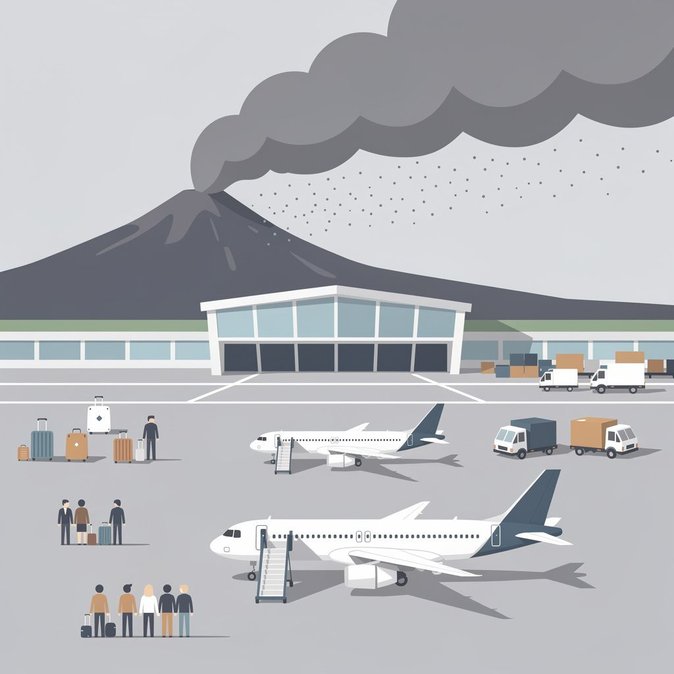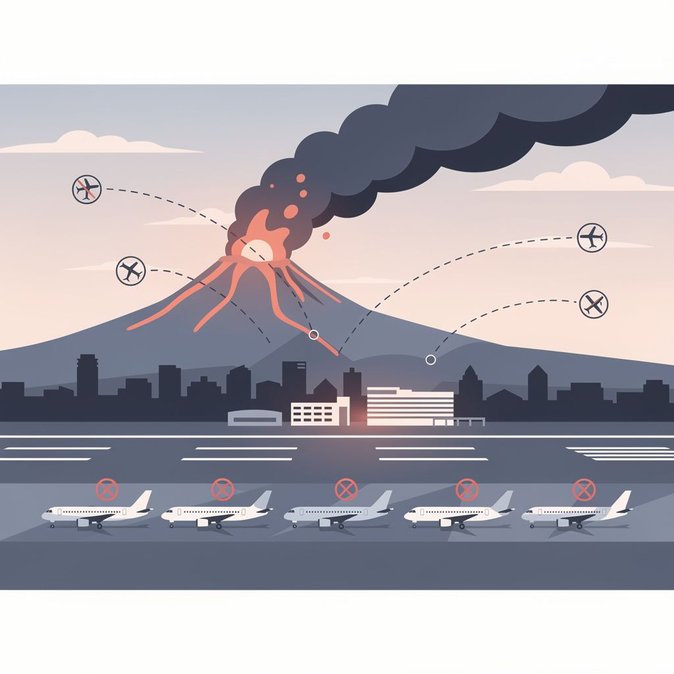
Sicily’s Mount Etna entered a new explosive phase on Saturday afternoon, sending a column of ash 4 kilometres into the sky and forcing authorities to halt all commercial traffic at Catania-Fontanarossa, the island’s second-busiest airport. The airport operator SAC, in consultation with the civil-protection department and air-navigation authority ENAV, first reduced hourly landings from ten to four before ordering a complete stop to both arrivals and departures. A red VONA (Volcano Observatory Notice for Aviation) was issued by Italy’s National Institute of Geophysics and Volcanology, the highest alert in the four-tier scale. The restriction is currently scheduled to last until 23:59 on Sunday, 27 September, but officials warned that further extensions are possible if ash fall continues to contaminate runways and critical air-navigation sectors C1 and B3. The closure has already triggered a cascade of operational headaches for airlines and passengers. At least a dozen flights were diverted to Palermo and Reggio Calabria on Saturday evening, while several Sunday morning rotations from major hubs such as Rome-Fiumicino, Milan-Linate and Frankfurt have been pre-emptively cancelled. SAC is urging travellers to re-confirm schedules with their carriers before heading to the airport and has opened additional help-desks in the departures hall. Train operator Trenitalia is honouring airline tickets on the Catania-Palermo and Catania-Messina routes to help stranded passengers reach alternative airports. For business-travel managers the disruption is a timely reminder that Sicily’s volcanic risk can have Europe-wide ripple effects. Catania handles more than 10 million passengers a year and is a critical cargo node for the island’s pharmaceutical and perishable-goods exports. Companies with just-in-time supply chains are advised to activate contingency routings through Palermo or Naples and to monitor NOTAM updates via the Eurocontrol Network Operations Portal. The civil-protection department’s bulletin also notes potential road closures on the A18 motorway due to ash fall, which could hamper landside transfers. Unlike weather-related delays, volcanic-ash cancellations fall under the ‘extraordinary circumstances’ exemption in EU261/2004, meaning airlines must provide care but are not obliged to pay financial compensation. However, they must still offer re-routing or refunds. Travellers holding fully flexible tickets may find it faster to rebook on the Palermo market and claim reasonable expenses later. Travel-risk teams should also check whether travellers need to extend Schengen stays if forced to remain in Italy longer than planned. Looking ahead, Etna’s current paroxysm appears linked to a new magma intrusion in the North-East crater detected earlier this month. Geologists say such episodes can oscillate for days; the last comparable event, in July 2023, disrupted flights for 36 hours. If the ash plume stabilises, Fontanarossa could reopen in stages from Monday afternoon, but a full recovery of the schedule may take the entire week, especially for long-haul connections that require precise slot coordination.
Source: Rai News