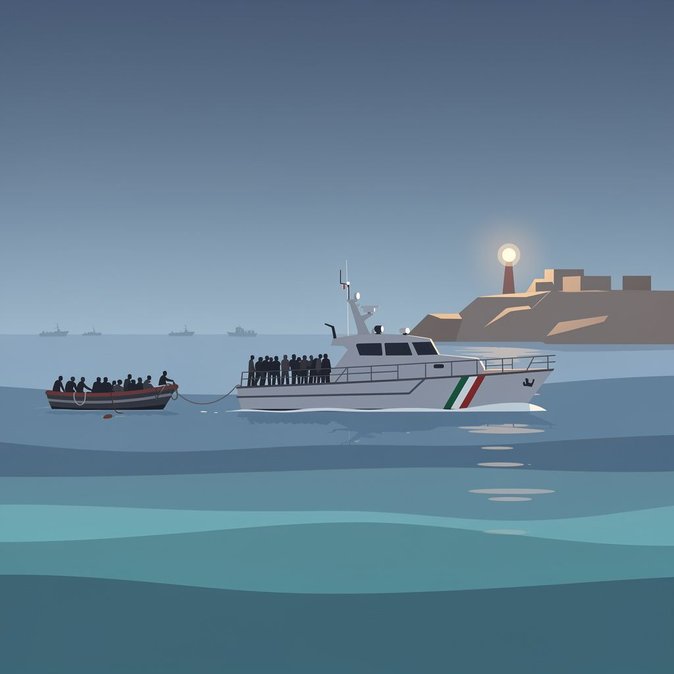
Rescue crews from the Guardia di Finanza and the Italian Coast Guard intercepted three small boats in the early hours of 26 September off the coast of Lampedusa, transferring a total of 96 people to the island. According to local authorities quoted by the newspaper La Sicilia, the vessels had departed from the Libyan ports of Zuwarah and Gas Garabulli and were carrying nationals of Egypt, Eritrea, Sudan, Côte d’Ivoire, Senegal and Nigeria. The latest arrivals come on top of more than 8,000 irregular landings recorded on the tiny Sicilian island since the start of the month, once again stretching the EU-funded hotspot at Contrada Imbriacola. Although only 297 migrants remained in the centre on Thursday evening after emergency transfers to the mainland, officials warn that the structure’s official capacity of 400 is routinely breached during peaks in sea crossings. Behind the numbers lie complex dynamics: calm seas, continuing instability in Libya and Tunisia, and word-of-mouth accounts of successful crossings are fuelling departures. Smugglers’ fees on the Central Mediterranean route now range from €1,500 for a place on an open wooden boat to more than €6,000 for a spot on a so-called “fast taxi” rigid dinghy, according to police data. Italy’s Interior Ministry says almost 176,000 migrants have reached its shores so far in 2026, up 14 % on the same period last year. For employers seeking seasonal labour, the spike in arrivals does not automatically translate into legal manpower; only asylum-seekers who obtain protection or people who secure a place under the annual Decreto Flussi quota can work regularly. Businesses in agriculture and hospitality therefore face a dilemma: either navigate a slow sponsorship process or risk fines for undeclared labour. Several industry groups are again lobbying the government to release unused 2026 quota places before the end of the year. Companies that post staff to Italy should factor in knock-on travel effects. Commercial ferry links between Sicily and the Pelagie Islands are being used to redistribute migrants and are subject to last-minute commandeering by the authorities, potentially disrupting freight and passenger schedules. Security managers are advised to monitor Prefecture of Agrigento updates and maintain flexible itineraries when routing personnel through Lampedusa, Porto Empedocle or Trapani.
Source: La Sicilia