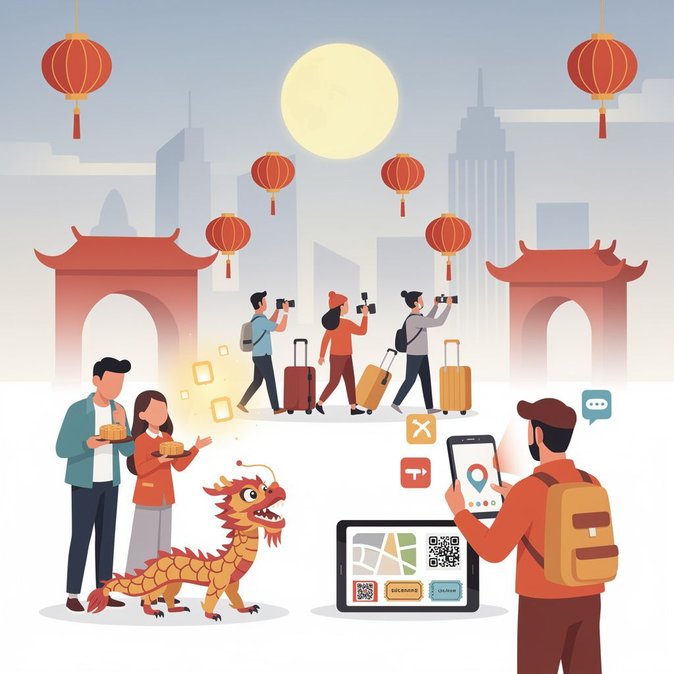
Beyond the headline numbers, the National Immigration Administration highlighted how foreign visitors are increasingly seeking immersive cultural experiences. Over the holiday, 728 000 foreign nationals crossed China’s borders, spending heavily on moon-cake gift boxes, Hanfu rentals and lantern-making workshops, according to surveys conducted at major attractions in Beijing, Xi’an and Hangzhou. The Ministry of Culture and Tourism has seized on the trend, unveiling a 2026-2030 plan that pairs traditional festivals with smart-tourism tools such as AR heritage guides and multilingual e-ticketing. Pilot projects launched this weekend included a ‘Scan-to-Learn’ WeChat mini-program at Luoyang’s Longmen Grottoes and real-time crowd dashboards for West Lake. Local governments are banking on cultural consumption to extend visitor stays beyond the typical five-day average. Hangzhou, for instance, now grants on-arrival VAT rebates at participating boutiques—a boon for expatriates and business travellers who mix meetings with sightseeing. Global mobility teams should expect more client and assignee requests for side trips timed to traditional festivals. Because hotel occupancy spiked to 92 percent in several cities, early booking and travel-policy flexibility will be crucial around future lunar-calendar holidays.