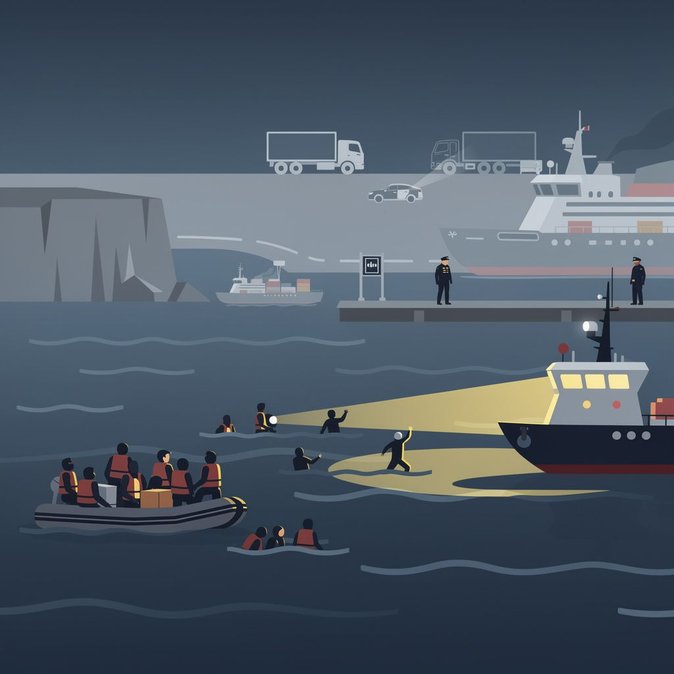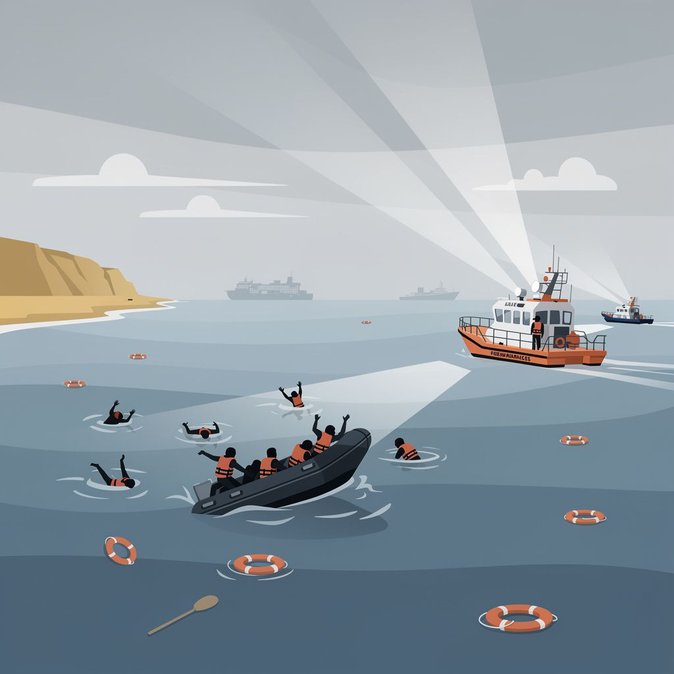
French rescue authorities confirmed on Monday, 28 September 2026, that two women and a 10-year-old child lost their lives when an overloaded dinghy capsized shortly after leaving Blériot-Plage near Calais in the early morning darkness. A coordinated operation involving a French Navy helicopter, several SNSM lifeboats and a customs patrol vessel managed to pull 102 survivors from the water and the partly-deflated craft. According to the Préfecture maritime de la Manche et de la mer du Nord, the alert was triggered at 05:47 CEST when coastal surveillance cameras detected the boat struggling in choppy seas. Rescue assets reached the scene within 20 minutes, but hypothermia had already set in for many of the occupants who were wearing only light clothing and no life-jackets. The rescued migrants—mostly Afghans, Sudanese and Syrians—were taken to Calais for medical screening and processing by the border police, while an investigation into smuggling networks has been opened by the Boulogne-sur-Mer prosecutor. The tragedy underscores the relentless pressure on northern France’s coastline despite beefed-up joint patrols, extra drones and last month’s Franco-British agreement to fund a new “integrated command centre” in Dunkirk. More than 31,000 people have attempted the Channel crossing so far in 2026, slightly below the same period last year but still far above pre-pandemic levels. NGOs accuse Paris and London of prioritising deterrence over safe legal pathways, while the French government insists that dismantling smuggling networks remains its top priority. For employers with staff on cross-Channel assignments, Monday’s incident is a stark reminder that ad-hoc border closures or police operations can create sudden delays at Calais and Dunkirk ports as resources are diverted to rescue work. Mobility managers are advised to monitor Préfecture maritime alerts and maintain flexible travel plans—particularly for road freight that shares security lanes with migrant processing facilities. Longer term, the EU’s new Pact on Migration and Asylum, which France began phasing in on 12 June 2026, aims to streamline asylum claims and bolster returns, but it has yet to curb irregular sea departures from the French coast.