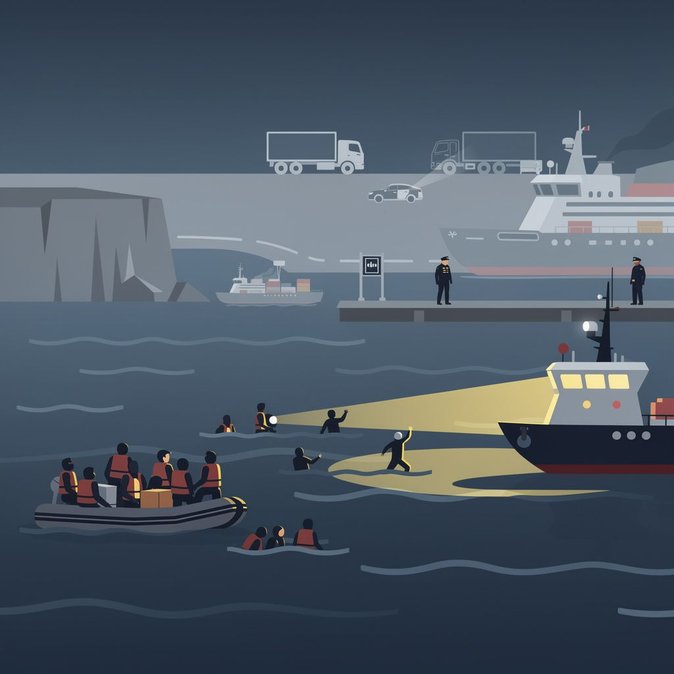
France’s long-running struggle to stem irregular sea crossings to the United Kingdom turned deadly again on 28 September when an overcrowded inflatable dinghy capsized in rough seas off Wissant, near Calais. French maritime prefecture officials confirmed that two women and a 10-year-old child lost their lives; 103 other occupants were pulled from the water by French coast-guard vessels and a commercial tanker that diverted to assist. The tragedy occurred little more than four nautical miles from the French coast, highlighting the very short yet perilous stretch of water that separates Pas-de-Calais from the Kent coastline. According to local prosecutors, preliminary interviews indicate that the craft set off from a beach near Hardelot in the early hours, equipped with only one outboard motor and no life-jackets for most passengers. Survivors—mostly Afghans, Eritreans and Sudanese—will be questioned by France’s anti-smuggling unit OFAST while they receive medical care in Calais. The incident has reignited debate over France’s current internal-border-control regime, re-introduced under the Schengen Borders Code until at least 31 October 2026. Interior-minister Gérald Darmanin reiterated that “drug and people-smuggling networks are adapting faster than our deterrence measures” and called on the UK to accelerate funding for surveillance drones and beach-patrol vehicles promised in the 2025 Sandhurst accord. For corporate mobility managers, the immediate impact is two-fold. First, heightened maritime patrols mean potential delays for commercial ferry, Channel Tunnel and RoRo freight services as search-and-rescue assets operate near shipping lanes. Second, the French government has signalled a weekend clamp-down on access roads to embarkation beaches—logistics providers serving Calais, Boulogne and Dunkirk should expect spot checks on vehicle manifests and crew passports. Longer-term, Brussels is under pressure to finalise a revised EU Facilitation Directive that would toughen penalties for transporting undocumented migrants, even inadvertently, which could feed through to stricter due-diligence requirements for haulage and relocation firms operating cross-Channel routes.