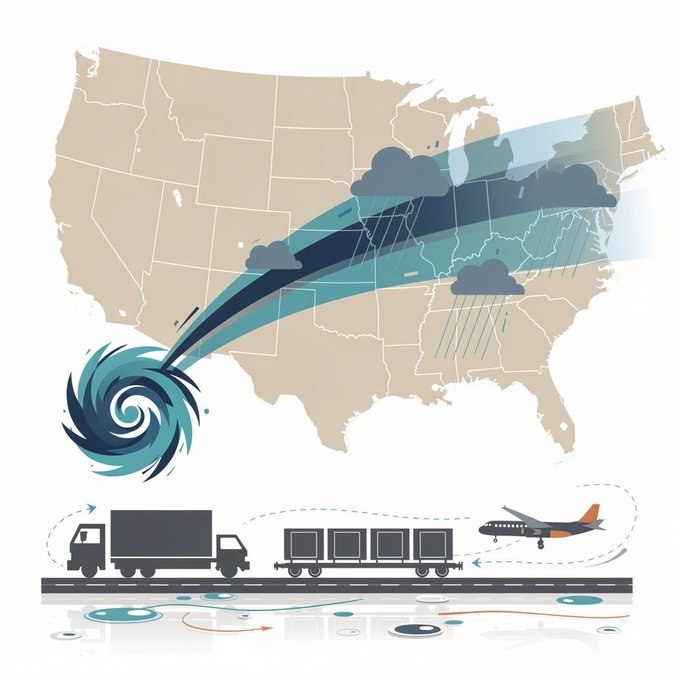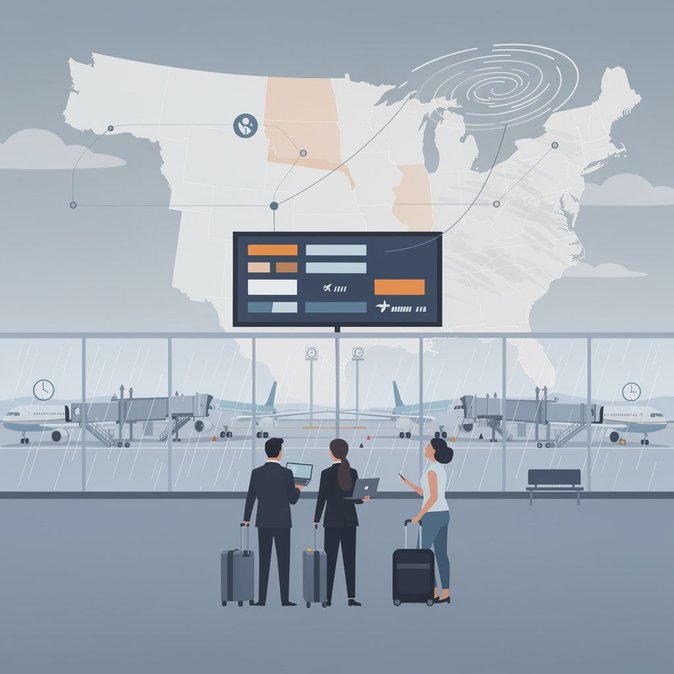
A powerful early-season nor’easter that moved up the U.S. East Coast overnight has forced airlines and federal regulators to slow or halt traffic at the nation’s busiest air-travel corridor. The Federal Aviation Administration’s Air Traffic Control System Command Center (ATCSCC) issued multiple ground-stop advisories for key hubs, including potential programs for Philadelphia (PHL) and LaGuardia (LGA), warning that volume and low ceilings could require flow restrictions through Monday afternoon. CNN’s live coverage reported more than 600 cancellations and several thousand delays on Sunday, with knock-on effects spilling into Monday morning as crews and aircraft struggled to reposition. Meteorologists expect embedded downpours and 20-35 mph wind gusts to linger through the first half of the business day, prolonging congestion at New York, Boston and Washington airports. For corporate travel managers, the timing could not be worse: quarter-end meetings and trade events that traditionally concentrate in late September are colliding with widespread schedule disruptions. Companies with East-Coast-centric mobility programs are advising travelers to build in at least half-day buffers or to re-route through mid-continent hubs such as Chicago or Dallas where limits are minimal. Airlines have issued weather waivers allowing free rebooking, but premium-cabin inventory is tightening fast. The storm also complicates compliance with the REAL ID pre-screening drills many firms are running ahead of summer 2027 enforcement, because travelers re-booked on separate tickets may need to clear identity verification again at congested checkpoints. Mobility teams are reminding employees to carry secondary ID and to monitor airline apps for gate changes. As the system resets, observers expect residual delays into Tuesday, underscoring the fragility of U.S. aviation infrastructure and the importance of robust travel-risk protocols.
Source: CNN / FAA ATCSCC