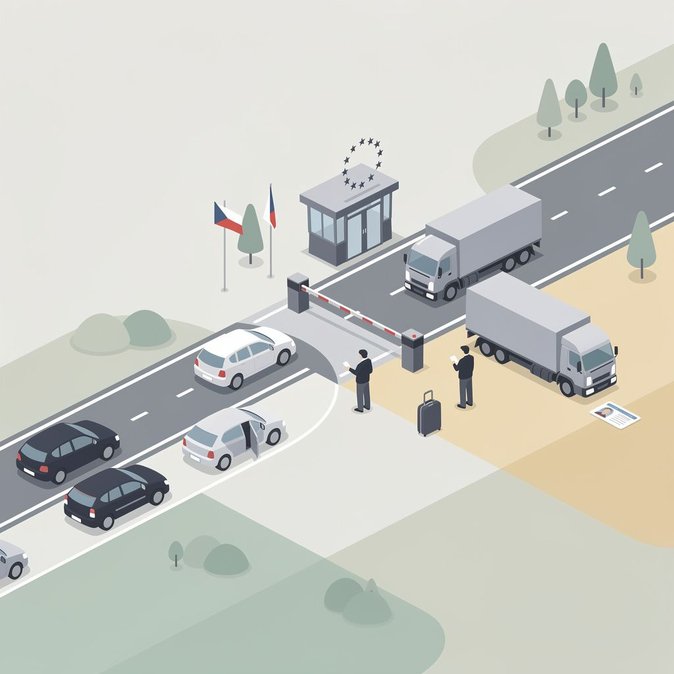
Cross-border commuters and freight operators travelling between the Czech Republic and Austria face at least another six months of spot checks after Vienna quietly extended its temporary re-introduction of Schengen internal border controls. An updated entry published on 28 September 2026 in the European Commission’s ‘Temporary Reintroduction of Border Control’ register now shows the Austrian measure running from 16 September 2026 through 15 March 2027, covering land and river borders with Slovakia and land borders with Czechia, Hungary and Slovenia. Austria first brought back systematic controls in 2015 at the height of Europe’s migration crisis and has repeatedly prolonged them, citing persistent irregular migration, pressure on its asylum-reception system and wider security threats ranging from Russia’s war against Ukraine to instability in the Middle East. The latest extension was justified by “continuous threats to internal security posed by irregular migration (including expected migratory pressure)” and the ongoing burden on basic services. For Czech business travellers, the practical impact is limited queues rather than full passport stamping, but companies moving goods across the 466-kilometre frontier need to factor in random inspections of drivers, cargo and vehicle documents. Logistics operators report average delays of 15–30 minutes at the busiest crossings (Mikulov/Drasenhofen and Dolní Dvořiště/Wullowitz) during peak hours; time-critical shipments are therefore being re-routed overnight or via the A5 motorway corridor to minimise disruption. Legal experts stress that while the checks are permitted under the Schengen Borders Code, the Code also obliges Austria to make them proportionate and to review the necessity every six months. The Czech Ministry of the Interior told Global Mobility News that it "regrets the continued suspension of a fully control-free border" but acknowledges Vienna’s security concerns; it will continue to monitor waiting times and liaise with Austrian counterparts. Companies are advised to brief staff to carry valid travel IDs and, for non-EU nationals resident in Czechia, proof of legal stay (e.g., biometric residence permits) to avoid secondary screening. Strategically, the extension highlights the fragility of the Schengen area’s free-movement framework and signals that ad-hoc national measures may persist as the EU finalises its long-awaited reform of migration and asylum rules in 2027. Multinational employers with Central-European operations should maintain contingency plans for further unilateral border actions by neighbouring states.