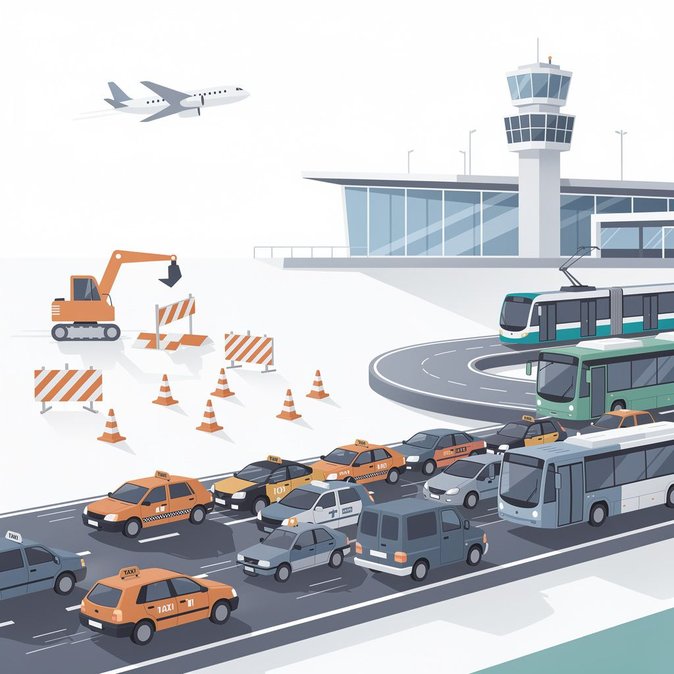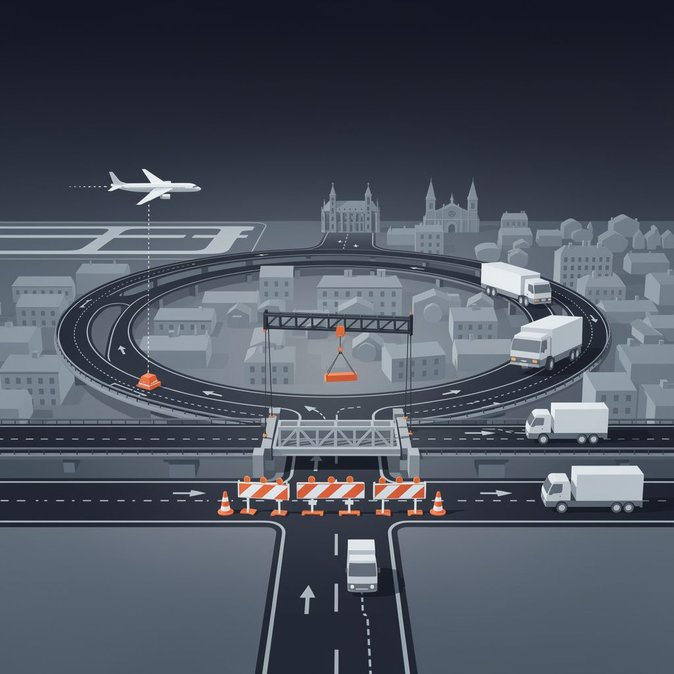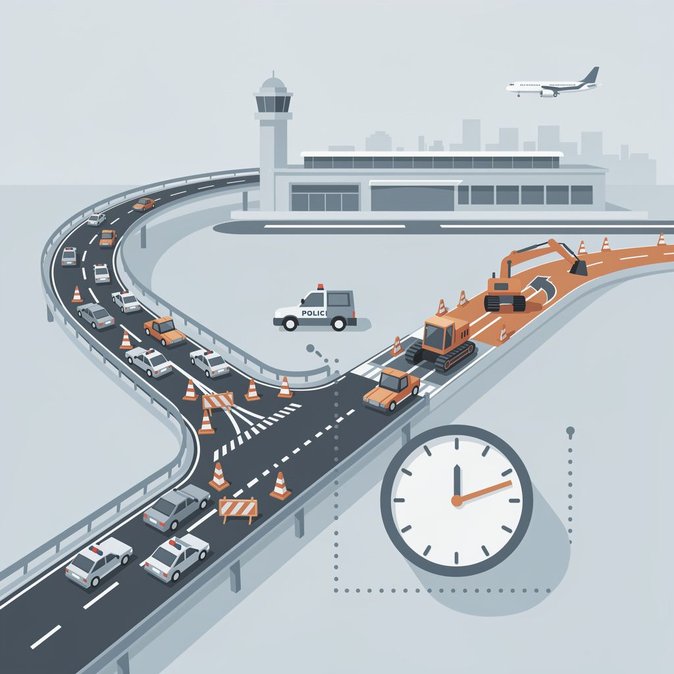
Drivers heading to Václav Havel Airport Prague should expect a very different approach route from today. Over the weekend the Directorate of Roads and Motorways (ŘSD) moved into the third phase of rebuilding the Aviatická–Lipská grade-separated interchange that channels up to 50 000 vehicles a day to the airport. The project is designed to create a safer, higher-capacity link from the D7 motorway, but in the short term it means a maze of one-way ramps, detours through Kněževes and temporary lane closures. For travellers coming from the city centre the good news is that a newly re-opened on-ramp allows direct access to the airport, with a dedicated slip road to Tuchoměřice. However, passengers driving from Tuchoměřice must now loop back via the D7 before turning toward the terminals, adding at least ten minutes to the journey at peak times. Departing traffic bound for Prague continues to use the same lanes as in the previous construction stage, but those heading toward Slaný or local villages face signed diversions and speed restrictions. Police have urged motorists to build “a substantial time reserve”, especially if they plan to use off-airport car parks that require multiple turns through the work zone. Airport managers say the interchange had become chronically overloaded, with near-misses common when cars merged onto the motorway. Once the CZK 450 million (€18 m) rebuild is finished in late November, the junction will feature longer acceleration lanes, separate bus bays, modern LED signage and a direct cycle path to the newly expanded Kiss-and-Fly area. The project is also timed to dovetail with the airport’s parallel expansion of Terminal 1 border-control capacity, intended to accommodate the Entry/Exit System (EES) kiosks coming in 2027. For business travellers the main implication is logistical: allow extra travel time and warn arriving assignees or visitors who may rely on ride-hailing apps that GPS routes can be unreliable around temporary closures. Companies with frequent shuttle services may want to brief drivers daily and consider issuing passengers with updated maps in English. On the upside, once completed the interchange promises smoother throughput, reduced accident risk and potentially shorter taxi queues during peak conference months. Until then, the airport, police and ŘSD all stress that compliance with temporary speed limits will be strictly enforced. Failure to account for delays could mean missed flights, higher transfer costs and disgruntled clients—an avoidable headache as Prague prepares for the autumn trade-show season.
Source: Pražská Drbna