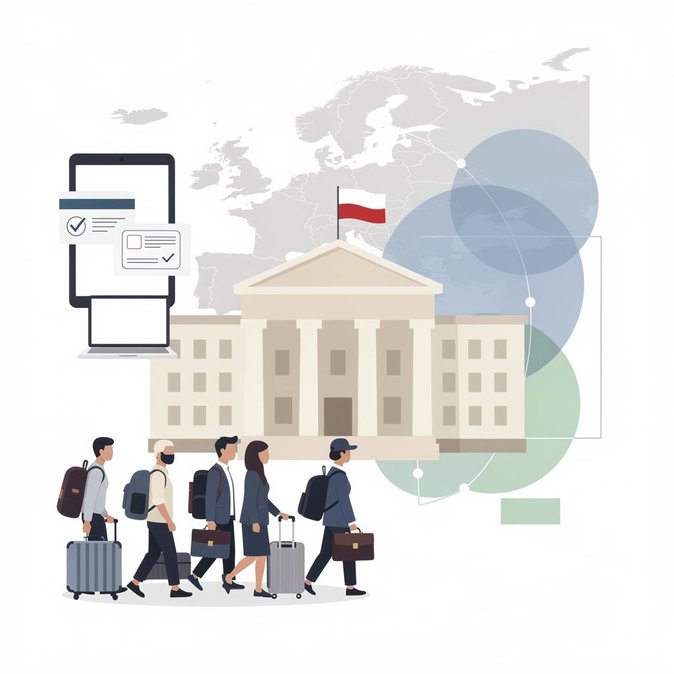
Legal practitioners, academics and NGO representatives gathered at the Faculty of Law and Administration of the University of Warsaw on 28-29 September for Poland’s first Congress of Migration and Refugee Law. Organised with UNHCR Poland and the Association for Legal Intervention, the two-day event examined the practical impact of recent overhauls to the Polish Aliens Act, EU asylum reforms and the forthcoming ETIAS travel-authorisation system. Panel sessions addressed hot-button issues for employers, including the digitalisation of residence-permit applications via the MOS platform, new fee structures for work-permit filings and the phasing-out of special benefits for Ukrainian beneficiaries of temporary protection. Labour-law specialists warned that tighter rules on visa-free workers from Georgia, Colombia and Venezuela could catch companies off-guard. A keynote by Dr L.R. Glas analysed the Chișinău Declaration’s implications for corporate relocation compliance, emphasising that Polish courts increasingly apply European Convention on Human Rights standards when reviewing deportation and detention cases. For HR, global-mobility and in-house legal teams the congress offered rare access to officials from the Office for Foreigners, Mazovian Voivodeship office and the Supreme Administrative Court, who fielded questions on processing backlogs and electronic evidence requirements. Conference proceedings will be published in English in November, providing a valuable reference for multinationals navigating Poland’s rapidly evolving migration framework.