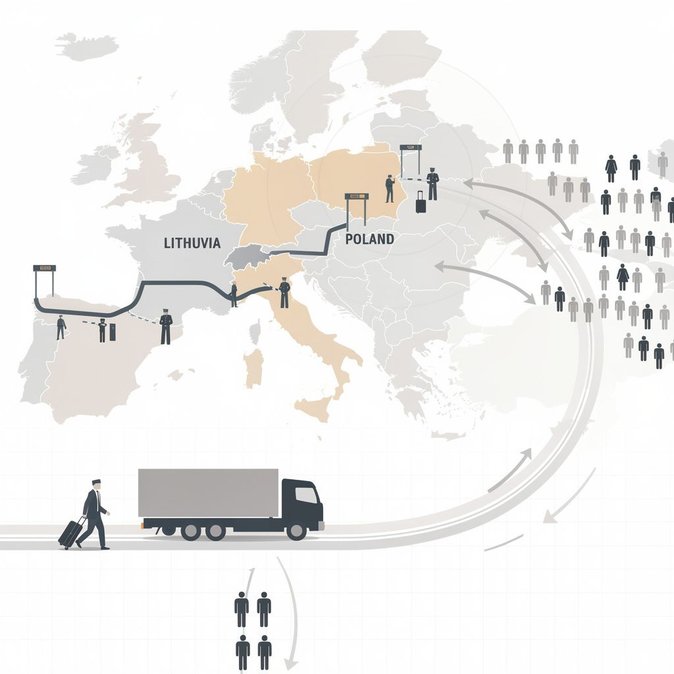
Meeting in Munich on 28 September, Lithuanian Interior Minister Martynas Katelynas told counterparts that the European Commission must factor in prevented illegal-border-crossing attempts when assessing migratory pressure. The minister noted that Lithuania is backed by Poland, Latvia, Estonia and Finland in seeking the change. The five states argue that current EU metrics—relying chiefly on registered asylum claims—understate pressure on their eastern frontiers, where hundreds of migrants are turned back daily under bilateral push-back regimes. Including prevented attempts would unlock more Frontex personnel and funding and justify continued internal Schengen checks such as Poland’s. Polish officials privately welcome the Lithuanian initiative, saying better data could strengthen Warsaw’s case in forthcoming Commission reviews of its own border-control extensions. For employers this technical debate matters because statistical thresholds in EU legislation trigger relocation quotas, reception-capacity funding and the activation of the Crisis Regulation under the New Pact. A higher recorded pressure figure could prolong stringent entry measures and slower visa issuance in the region. Businesses with supply chains spanning the Suwałki corridor and Via Carpatia should therefore monitor Brussels’ response; a recalibrated index could keep spot-checks on the German-Polish and Lithuanian-Polish borders in place beyond the current March 2027 timeline.