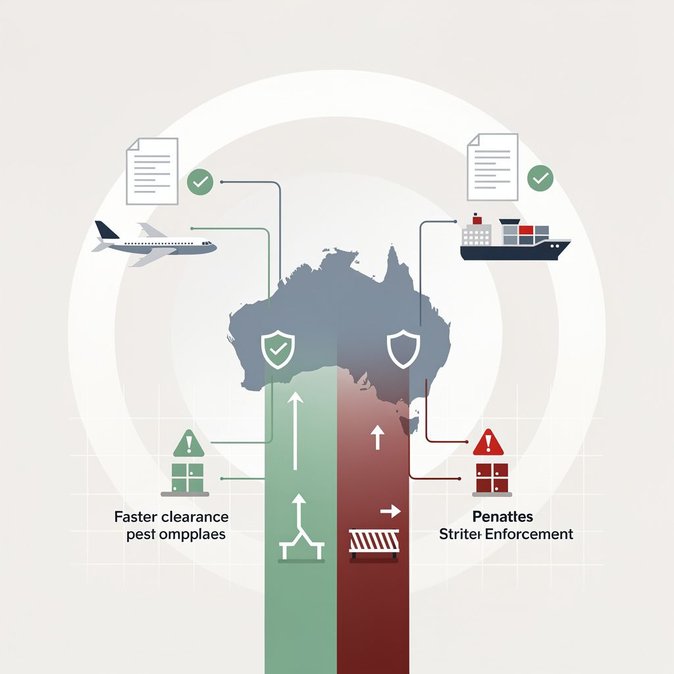
Australia’s long-anticipated Biosecurity Regulations 2026, together with three companion instruments, officially entered into force on 1 October 2026. The new legal package replaces the 2016 regulations that were due to sunset on the same day. According to the Department of Agriculture, Fisheries and Forestry (DAFF), the revision streamlines more than a decade of amendments, removes outdated provisions and clarifies the powers of frontline agencies at airports, seaports and land borders. Among the most significant changes for global mobility teams is a modernised “exposed conveyances” framework. International aircraft and vessels that meet prescribed sanitation standards may now receive class exemptions from certain on-arrival bio-controls, reducing turnaround times for carriers that can demonstrate strong compliance histories. Conversely, operators with repeated infractions face higher civil penalties and compulsory remediation plans. The regulations also expand pre-departure reporting obligations. Airlines must transmit enhanced traveller, crew and cargo manifests to Australian authorities up to 24 hours before wheels-up. DAFF says the data will be integrated with the Australian Border Force’s traveller risk engine and the forthcoming Australia Travel Declaration to enable earlier targeting of high-risk passengers and goods. For corporates moving staff, the updated laws mean tighter responsibility for company-chartered flights and vessels. Mobility managers should review their carriers’ biosecurity accreditation status and ensure assignees understand Australia’s strict prohibition on bringing animal products, seeds and soil into the country. Failure to declare bio-risk items can now attract on-the-spot fines of A$5,500—up from A$2,664. DAFF will publish a six-month transition guide and hold industry webinars through March 2027. Companies that rely on group charters for fly-in/fly-out operations, cruise season deployments or project cargo movements are urged to engage early, as the department has signalled a zero-tolerance approach once the grace period ends next year.