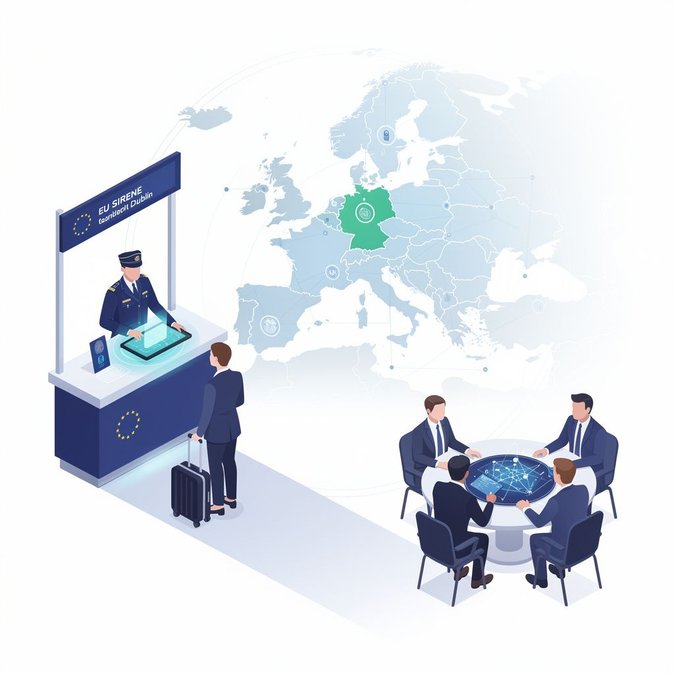
Senior law-enforcement officials from more than 30 countries gathered in Dublin on 6–7 October for the bi-annual Heads of SIRENE conference, organised by An Garda Síochána under Ireland’s EU Council Presidency. SIRENE (Supplementary Information Request at the National Entries) bureaux act as the backbone of the Schengen Information System (SIS), processing alerts on wanted persons, stolen property and migration-related refusals. Although Ireland is not part of the Schengen border-free zone, it connects to SIS for law-enforcement cooperation. Delegates discussed plans for SIS 4.0, which will add biometric data fields and real-time API feeds from airlines, aiming to cut response times to seconds when Irish or EU officers query an alert. The agenda also covered joint training for border officials and standardising protocols for dealing with third-country nationals refused entry elsewhere in the EU. For mobility practitioners, closer SIRENE cooperation means that overstays, lost passports and deportation orders issued in one EU country are more likely to flag during Irish border checks. Employers should remind travelling staff that penalties for unresolved immigration violations in any SIS-connected state can disrupt entry to Ireland, even though it is outside Schengen. The conference signals Ireland’s ambition to remain tightly plugged into European security architecture while preserving the Common Travel Area with the UK. Outcomes will feed into legislative proposals expected early 2027, potentially expanding data-sharing obligations for carriers operating into Dublin, Cork and Shannon.