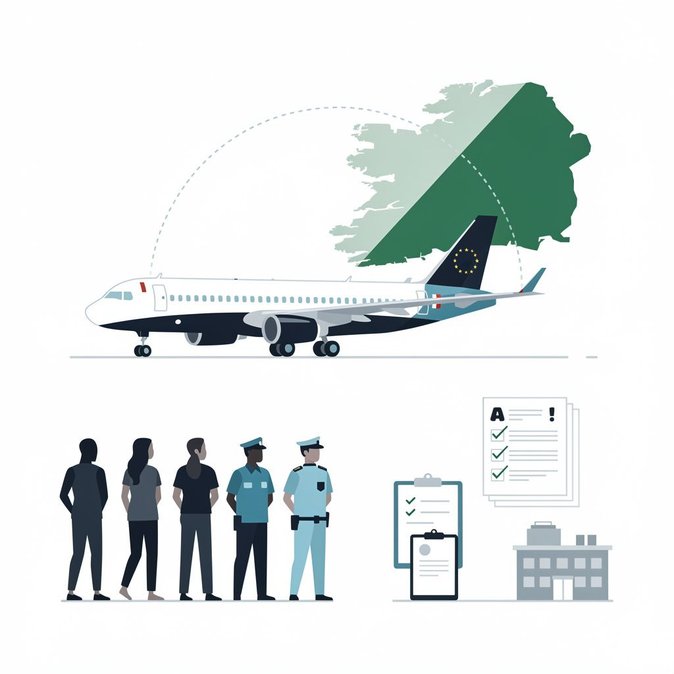
Irish authorities have confirmed that six Nigerian nationals with a combined 75 criminal convictions were removed from the State yesterday, 7 October, on a chartered aircraft that connected in Rome with a wider Frontex joint-return operation. The Garda National Immigration Bureau (GNIB) concluded that several of the men were too dangerous to be placed on regular commercial services, where carriers normally allow only one deportee per flight. Chartered removal cost the taxpayer almost €77,000, but officials argue it is more cost-effective than leasing an entire jet for Irish use alone and enables cooperation with other EU members when numbers are low. A Department of Justice briefing for Minister Jim O’Callaghan notes that Ireland has participated in six Frontex charters so far this year, removing 221 people – including 67 EU citizens – who were deemed a threat to public safety. The document adds that Ireland will increase participation in EU joint flights to overcome logistical barriers in landing charters directly in some third-country destinations. For multinational employers, the operation underlines the government’s willingness to enforce deportation orders against foreign nationals convicted of serious offences. Businesses sponsoring non-EEA staff are advised to maintain robust compliance records, as GNIB risk assessments take prior immigration breaches and criminality into account. HR teams should also ensure that employees awaiting appeal outcomes remain fully documented, because once a deportation order is signed, removal can proceed rapidly under the European Return Directive. While rare, the use of charters signals a tougher stance on public-order removals that may influence future discussions on Ireland’s opt-out from certain Schengen rules. Employers should brief travelling staff that high-profile deportations can trigger additional random checks at ports of entry over the coming weeks, particularly for passports issued in countries with elevated refusal rates.
Source: Irish Examiner